Art festivals bring together creators and appreciators in celebrations of visual expression that define communities across Texas. From established events like the Bayou City Art Festival in Houston to intimate gallery strolls in small-town downtowns, these gatherings require thoughtful logistics—and restroom facilities deserve careful attention that matches the aesthetic sensibility of the events themselves.
Art festival organizers understand that presentation matters at every level. Attendees who appreciate visual beauty notice when practical elements clash with carefully curated environments. This guide explores how restroom trailer planning can support rather than detract from your Texas art festival’s atmosphere while meeting the practical needs of artists, vendors, and attendees.
Understanding Art Festival Audiences
Art festival attendees differ demographically and behaviorally from typical outdoor event crowds. Understanding these differences helps you plan appropriate facilities that meet actual needs.
Demographic Considerations
Art festivals typically attract adults with disposable income—people who purchase original artwork, craft pieces, and gallery-quality items. This audience skews older than music festival crowds and often includes a significant proportion of seniors. They expect clean, comfortable facilities and notice quality differences that younger crowds might overlook.
Family attendance varies by festival type. Fine art festivals may attract primarily adult couples, while craft fairs and community art events often draw families with children. Know your audience composition when planning facility types and quantities.
Behavioral Patterns
Art festival attendees typically move at leisurely paces, spending significant time examining artwork and engaging with artists. Unlike concert crowds that surge during intermissions, art festival restroom usage distributes more evenly throughout operating hours. However, you may see moderate spikes around meal times as people finish eating before continuing to browse.
Many art festival attendees visit multiple times during multi-day events, returning for additional purchases or to bring family members. This repeat visitation pattern means your restroom facilities create lasting impressions that influence whether people return.
Aesthetic Integration Strategies
Art festivals present unique opportunities to integrate practical facilities into cohesive visual environments. While you can’t transform restroom trailers into art installations, thoughtful placement and decoration can minimize visual disruption and even add to festival ambiance.
Strategic Concealment
Position restroom trailers where they serve attendees without dominating sight lines. Natural barriers—trees, hedges, existing buildings—can provide visual screening. If your festival occurs in open spaces without natural concealment, consider temporary screens, fabric panels, or strategic booth placement that blocks direct views while maintaining easy wayfinding.
The goal isn’t hiding facilities so completely that attendees can’t find them—it’s reducing visual prominence while maintaining accessibility. Facilities should be discoverable without being the first thing visitors notice.
Complementary Decoration
Some festivals dress restroom areas to match overall event aesthetics. Potted plants, coordinated signage, decorative fencing, or seasonal decorations around facility perimeters integrate restrooms into the visual landscape. Work with your rental provider to understand what exterior modifications are permissible.
Consider commissioning local artists to create signage or decorative elements for restroom areas. This approach supports the artistic community while creating unique visual elements that transform utility into expression.
Selecting Appropriate Units
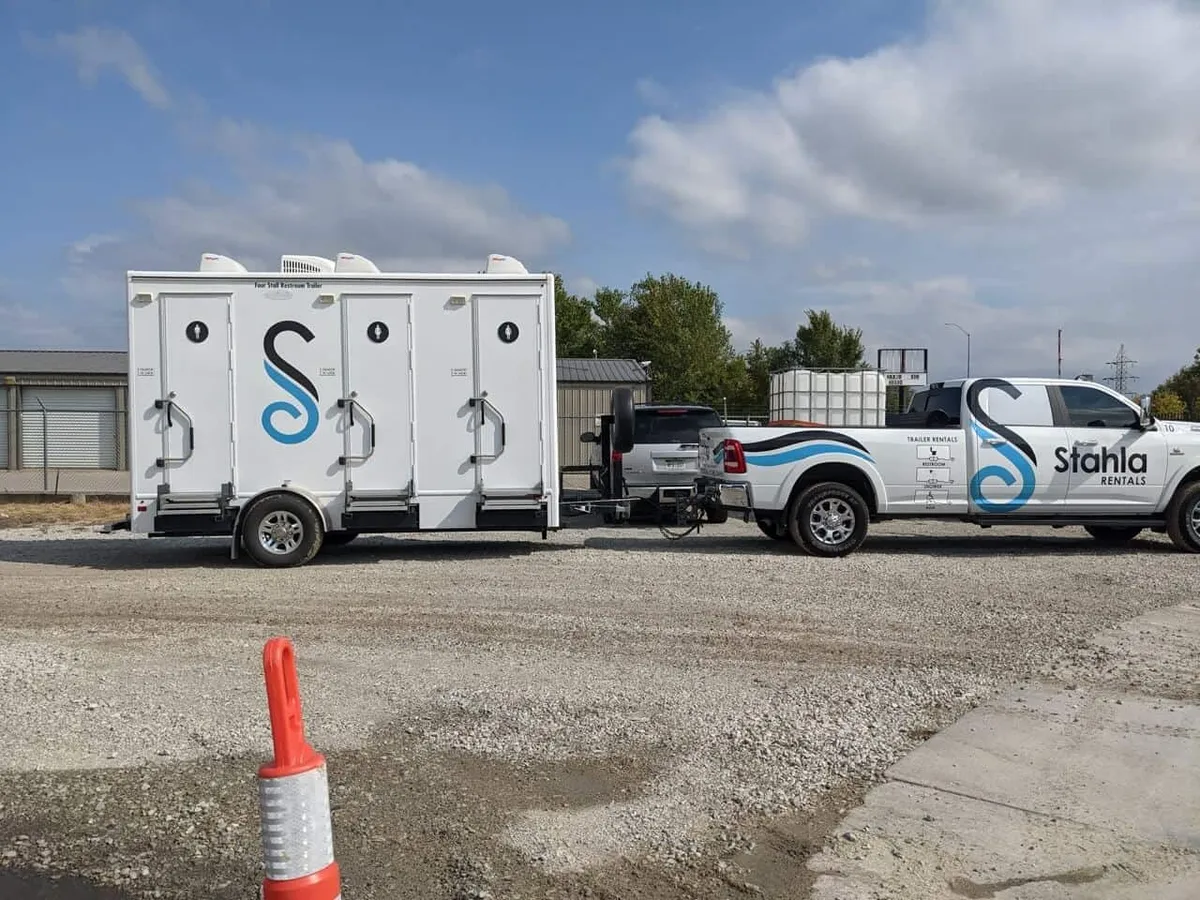
Choose restroom trailers with neutral, clean exteriors rather than units with prominent branding or utilitarian appearances. Higher-end trailers typically feature more attractive exterior designs with coordinated colors and clean lines. The additional rental cost for visually appealing units often justifies itself at aesthetically-focused events.
Capacity Planning for Art Festivals
Art festival restroom capacity calculations balance practical needs with space constraints. Many art festivals occur in urban settings with limited real estate for non-vendor uses.
Attendance-Based Calculations
Standard event planning suggests one restroom station per 50-75 attendees for 4-hour events. Art festivals typically run longer—8-10 hours daily for multi-day events—but with lower simultaneous attendance as people come and go throughout the day.
Calculate based on peak simultaneous attendance rather than total daily visitors. A festival with 5,000 daily visitors might never have more than 1,500 on site at once. Plan capacity for that 1,500-person peak: roughly 20-30 restroom stations depending on demographic factors.
Artist and Vendor Facilities
Don’t forget that artists and vendors need restroom access throughout long festival days—often 10+ hours when setup and breakdown are included. They can’t easily leave booths unattended to use distant facilities. Position some restroom capacity near artist areas or provide dedicated facilities for participants.
Some festivals provide separate artist restrooms to ensure booth operators have quick access without competing with attendee traffic. This consideration for artist needs contributes to positive participant experiences that encourage return participation in future years.
Downtown and Urban Venue Challenges
Many Texas art festivals occur in downtown areas, historic districts, and urban parks where space constraints and access limitations create logistical challenges.
Limited Footprint Requirements
Urban festivals often can’t accommodate large restroom compounds. Compact trailer configurations, multiple smaller units distributed throughout the festival footprint, or hybrid approaches using existing venue restrooms supplemented with portable facilities may be necessary.
Work with municipal permits and venue managers to identify allowable placement zones early in planning. Last-minute scrambling for restroom locations creates problems that affect the entire festival layout.
Delivery Access
Downtown delivery may require navigating narrow streets, height restrictions, and time-limited access windows. Coordinate with your restroom provider about delivery vehicle dimensions and scheduling. Some urban festivals take delivery the night before, requiring security arrangements for equipment left on-site.
Historic district regulations may affect what types of equipment can be placed in certain areas. Verify permit requirements and any aesthetic restrictions that apply to temporary structures in your festival zone.
ADA Accessibility at Art Festivals
Art festival attendees include people with mobility challenges who deserve full access to both artwork and facilities. ADA-compliant restroom trailers ensure all visitors can enjoy your festival comfortably.
Position accessible facilities along accessible routes through the festival. If your event spans multiple city blocks, provide accessible restrooms in multiple locations rather than concentrating them in one area. Attendees using wheelchairs or mobility aids shouldn’t face significantly longer travel distances to reach appropriate facilities.
Accessible routes to restrooms deserve attention equal to accessible routes through vendor areas. Ensure pathways are adequately wide, surfaces are navigable, and temporary obstacles don’t block access. Staff should know locations of accessible facilities to provide accurate directions.
Weather Considerations for Art Festivals
Texas weather affects both artwork and restroom facilities. Art festival planners already think carefully about weather impacts on displayed pieces—extend that thinking to your restroom planning.
Heat and Climate Control
Spring and fall art festivals in Texas often enjoy pleasant weather, but temperatures can spike unexpectedly. Climate-controlled restroom trailers provide comfortable experiences regardless of outside conditions. The demographic that attends art festivals—often including seniors—particularly appreciates climate-controlled facilities during warm weather.
Even during moderate weather, restroom trailers without climate control can become uncomfortably warm, especially units in direct sunlight. Shade structures or strategic positioning under trees keeps facilities more comfortable without relying entirely on mechanical cooling.
Rain Contingencies
Art festivals face difficult decisions when rain threatens—protecting artwork often takes priority. But restroom facilities remain essential regardless of weather. Ensure facilities can operate during rain events, with covered approaches where possible and ground protection that prevents mud accumulation around facility entrances.
Multi-Day Festival Management
Many art festivals span multiple days, requiring sustained facility management throughout the event run. Unlike single-day events where facilities only need to survive a few hours, multi-day art festivals demand consistent quality from Friday opening through Sunday close.
Establish servicing schedules that maintain facility quality between festival days. Evening service after daily closing and morning refresh before opening ensures each day begins with clean facilities. During operating hours, regular monitoring and touch-up cleaning keeps facilities presentable throughout the day.
Supply management across multi-day events requires attention. Paper products, soap, and sanitizer deplete faster than you might expect with art festival crowds who wash hands frequently after handling artwork. Maintain adequate reserves on-site to prevent mid-festival shortages.
Budgeting for Art Festival Restrooms
Art festival budgets typically prioritize artist payments, marketing, and production elements. Restroom facilities sometimes get relegated to afterthought status—a mistake that affects attendee experience and festival reputation.
Plan for restroom costs early in budgeting. Standard restroom trailers for art festivals typically run $800-$1,500 per day depending on size and features. Higher-end units with better aesthetics range from $1,200-$2,500 daily. Multi-day rentals often include discounted rates. Budget also for servicing, which adds 20-30% to base rental costs.
Consider restroom quality as a marketing investment. Clean, attractive facilities contribute to overall festival impressions that influence word-of-mouth recommendations, social media posts, and return attendance. The differential cost between basic and quality facilities represents a small fraction of total festival budgets but significantly impacts attendee experience.
Partner with Texas Art Festival Specialists
Art festival restroom planning requires providers who understand both practical logistics and aesthetic priorities. Working with experienced partners helps ensure your facilities meet the elevated expectations of art-appreciating audiences while handling the practical demands of outdoor event operations.
Ready to plan restroom facilities for your Texas art festival? Request a consultation that considers your festival’s aesthetic requirements, space constraints, and audience demographics. Let’s create a restroom plan that supports your event’s artistic vision.