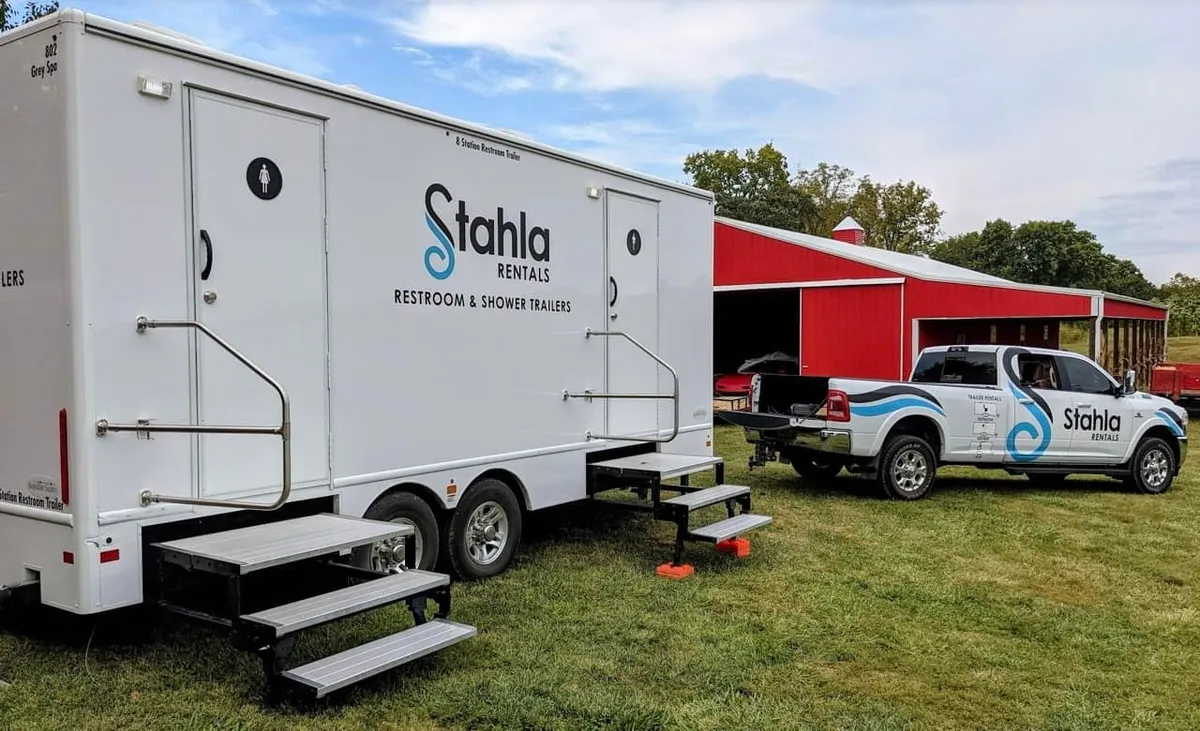
Concert venues across Texas face unique challenges when it comes to restroom facilities. Whether you’re managing an outdoor amphitheater, a festival grounds, or a temporary concert setup, getting restroom capacity right is essential for attendee satisfaction, health code compliance, and smooth event operations. Inadequate facilities lead to frustrated crowds, long lines, and the kind of negative reviews that follow venues for years.
This comprehensive guide walks Texas concert venue operators and event planners through the calculations, considerations, and best practices for restroom trailer capacity planning. From intimate acoustic performances to massive stadium shows, proper restroom planning ensures your audience focuses on the music, not the facilities.
The Concert Restroom Calculation Challenge
Concerts create restroom usage patterns unlike any other event type. The nature of live music—with opening acts, headliners, encores, and intermissions—creates predictable surge periods that can overwhelm inadequately planned facilities. Understanding these patterns is the first step toward proper capacity planning.
Peak Usage During Set Changes
The most intense restroom demand occurs during set changes and intermissions. When the opening act finishes, a significant portion of your audience heads for restrooms simultaneously. At a 10,000-person venue, you might see 2,000-3,000 people seeking facilities within a 15-20 minute window. Your restroom infrastructure must handle these surge periods without creating lines that extend into the next performance.
Texas concert planners should calculate capacity based on these peak moments, not average hourly usage. A venue that seems adequately equipped for steady flow can become completely overwhelmed during set breaks.
Beverage Consumption Factor
Concert audiences consume beverages at rates far exceeding typical events. Between beer sales, soft drinks, water, and mixed drinks, the average concert attendee consumes 3-5 beverages over a 4-hour show. This dramatically increases restroom usage frequency compared to events without significant beverage service.
Texas summer concerts amplify this factor further. Heat drives additional hydration needs, meaning your August outdoor show in Houston or Dallas will see restroom usage rates 30-50% higher than a similar event in October. Build this seasonal adjustment into your calculations.
Capacity Formulas for Texas Concert Venues
Industry standards provide baseline calculations, but Texas conditions require adjustments. Here’s a practical framework for concert restroom capacity planning:
Basic Calculation Method
Step 1: Start with one restroom station per 75 attendees for general admission events. For seated venues with defined intermissions, you can adjust to one per 100 attendees since usage distributes more predictably.
Step 2: Apply the gender ratio adjustment. Women’s facilities require longer usage times—typically 90 seconds versus 45 seconds for men. Venues should provide roughly 60% women’s stations and 40% men’s stations, or use unisex facilities to allow natural balancing.
Step 3: Add the Texas heat modifier. For outdoor summer events, increase your base calculation by 25-40%. A venue that needs 100 restroom stations for a spring concert might need 130-140 for a July show.
Step 4: Factor in alcohol service. Events with significant beer and liquor sales should add another 20% capacity above base calculations. The combination of alcohol and Texas heat can push restroom usage to extreme levels.
Example Calculation
Consider a 5,000-person outdoor concert in San Antonio during August with full bar service:
Base calculation: 5,000 ÷ 75 = 67 stations
Texas summer adjustment (+35%): 67 × 1.35 = 90 stations
Alcohol adjustment (+20%): 90 × 1.20 = 108 stations
This venue should plan for approximately 110 restroom stations to handle peak demand comfortably. Under-planning by even 20% can result in 30+ minute lines during set changes—an unacceptable situation for concert-goers.
Strategic Placement for Concert Venues
Capacity calculations tell you how many facilities you need; placement strategy determines whether they’ll actually work. Poor placement creates bottlenecks even when total capacity is adequate.
Distributed Placement Approach
Avoid concentrating all restroom facilities in one location. Instead, distribute stations throughout the venue grounds so attendees can access facilities without fighting through crowds or missing significant portions of performances. Aim to position restrooms so no attendee is more than 2-3 minutes walk from the nearest facility.
For outdoor concert venues, create multiple restroom clusters around the perimeter of the audience area. Place facilities near concession stands—attendees often combine restroom and refreshment trips. Position additional units near entrance/exit points to serve arriving and departing crowds.
Avoiding Stage Sight-Line Conflicts
Restroom trailers should never obstruct stage views or interfere with sound and lighting equipment. Work with your production team to identify placement zones that serve attendees without compromising the concert experience. Side areas and rear perimeters typically offer the best combination of accessibility and unobtrusiveness.
VIP and General Admission Separation
If your venue offers VIP tickets or premium seating areas, provide dedicated restroom facilities for these guests. VIP attendees pay premium prices and expect shorter lines and nicer facilities. Luxury restroom trailers in VIP areas create a distinctly elevated experience while preventing premium guests from competing with general admission crowds for facilities.
ADA Compliance at Concert Venues
Concert venues must provide accessible restroom facilities for attendees with disabilities. Beyond legal requirements, accessible facilities demonstrate your venue’s commitment to welcoming all music fans. ADA-compliant restroom trailers include wheelchair-accessible stalls, grab bars, appropriate fixture heights, and ramp access.
Position accessible facilities near ADA seating areas and accessible pathways. Attendees using wheelchairs or mobility aids shouldn’t have to travel significantly farther than other guests to reach restrooms. Consider the terrain of your venue—accessible routes should avoid steep grades, loose gravel, or other obstacles that create barriers for wheelchair users.
Texas venues hosting events with 5,000+ attendees should provide ADA-accessible units at every restroom cluster, not just in one central location. This ensures accessibility throughout the venue rather than forcing attendees with disabilities to travel to specific areas.
Genre-Specific Considerations
Different music genres attract different audience demographics and behaviors, which affects restroom planning:
Country and Red Dirt: Texas country concerts typically involve significant tailgating and pre-show drinking. Many attendees arrive well-hydrated (so to speak), increasing early restroom demand. Plan for higher-than-average usage in the first hour of gate opening.
Rock and Metal: These audiences often stay in position near the stage throughout the show, with concentrated restroom usage during set changes. Plan for intense surge capacity rather than steady flow.
EDM and Electronic: Multi-hour sets with minimal breaks create different patterns. Usage distributes more evenly but overall volume remains high due to hydration needs and extended event duration.
Family Concerts: Events attracting families with children require additional capacity. Kids need more frequent restroom visits and take longer per visit. Add 15-20% capacity for family-oriented shows.
Multi-Day Concert Events and Festivals
Multi-day concerts and festivals require sustained facility management that goes beyond single-day calculations. Your restrooms need to remain clean, stocked, and functional across multiple 10+ hour days of continuous use.
Plan for servicing schedules that maintain facility quality without disrupting performances. Typically this means early-morning deep cleaning before gates open and lighter maintenance rotations throughout operating hours. High-traffic areas may need attention every 2-3 hours during peak days.
Multi-day events also face cumulative stress on facilities. Even quality restroom trailers show wear after thousands of uses. Build in contingency units—typically 10-15% above calculated needs—to allow for rotation and maintenance without reducing available capacity.
Technology and Wayfinding
Modern concert venues increasingly use technology to manage restroom logistics. Real-time occupancy monitoring can direct attendees to facilities with shorter lines. Event apps can display restroom locations and current wait times, helping distribute usage more evenly across available facilities.
Clear physical signage remains essential—not everyone uses event apps, and phones die during long concerts. Illuminated restroom signs visible from throughout the venue help attendees navigate, especially during evening events when natural light fades.
Budgeting for Concert Restroom Facilities
Restroom costs vary based on event size, duration, and facility quality level. Texas concert venues typically budget $15,000-$75,000 for restroom facilities at major events, with costs scaling based on attendance and amenity expectations.
Standard portable restrooms cost $100-$175 per unit for single-day events. Restroom trailers with multiple stations, climate control, and upgraded amenities range from $800-$2,000 per day depending on size and features. Luxury trailers for VIP areas can exceed $2,500-$4,000 daily.
Don’t underestimate servicing costs. Multiple daily service visits, supply replenishment, and waste removal can add 30-50% to base rental costs for multi-day events. Include these operational costs in your initial budget to avoid mid-event surprises.
Partner with Texas Concert Restroom Experts
Concert restroom planning requires experience with Texas conditions, venue logistics, and crowd management. Working with providers who understand concert-specific challenges helps ensure your facilities match your event’s unique needs.
The right restroom partner can help optimize placement for your specific venue layout, recommend the appropriate mix of standard and premium facilities, and develop servicing schedules that keep facilities performing throughout your event.
Ready to plan restroom facilities for your Texas concert venue? Request a customized quote based on your venue capacity, event schedule, and attendee expectations. Our team specializes in Texas concert and festival restroom solutions, bringing the expertise needed to keep your audience focused on the music.