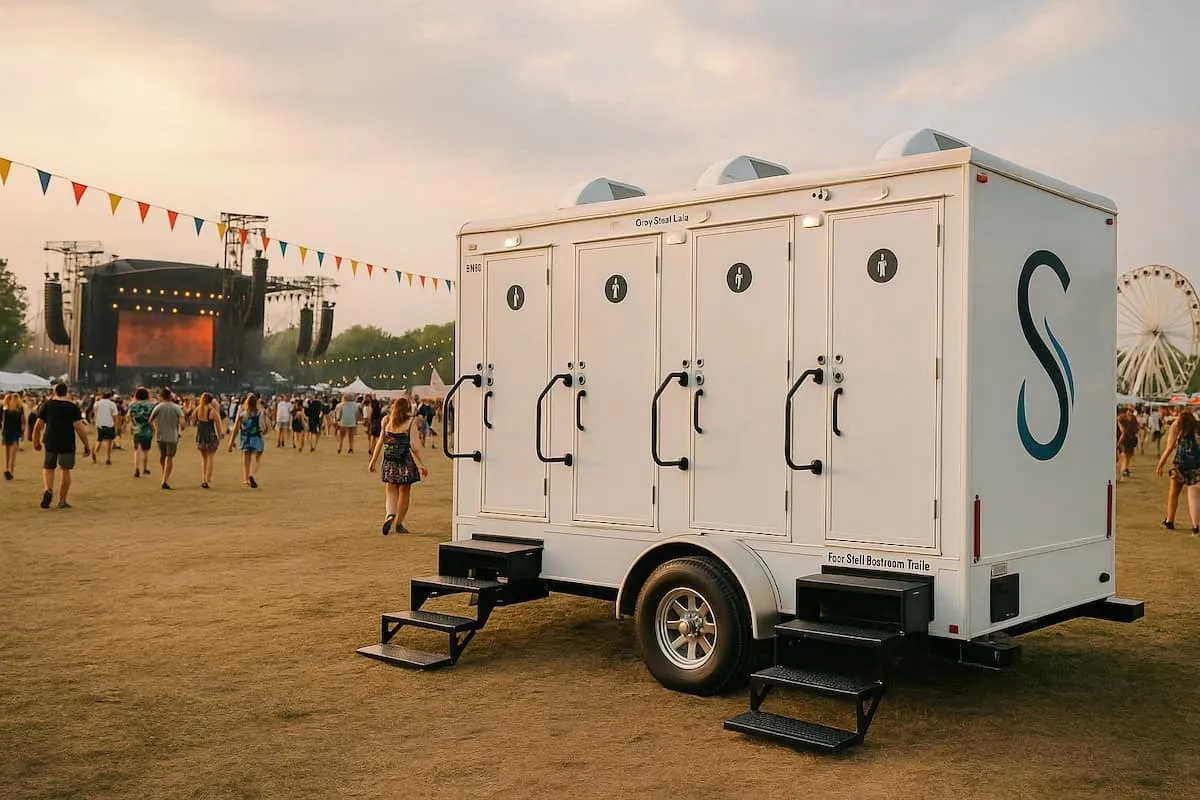
County fairs represent a proud Texas tradition, bringing communities together for livestock shows, carnival rides, food vendors, and family entertainment. From the massive State Fair of Texas to beloved local county fairs throughout our state, these events require comprehensive planning—and restroom facilities are a critical component that can make or break your attendees’ experience.
As a county fair organizer, you’re managing multiple competing priorities: vendor coordination, entertainment scheduling, parking logistics, and safety planning. Restroom facilities often get pushed down the priority list until it’s almost too late. This guide provides everything Texas fair organizers need to know about planning, placing, and managing restroom trailer rentals for a successful county fair.
Understanding County Fair Restroom Demands
County fairs present unique restroom challenges that differ from other events. The extended duration—often spanning multiple days or even weeks—creates sustained demand patterns. You’re serving families with young children, elderly attendees, agricultural workers and exhibitors, food vendors, carnival staff, and general visitors, each with different needs and expectations.
Texas county fairs also contend with our state’s heat, which increases hydration and consequently restroom usage. A typical fair attendee visits restroom facilities 2-3 times during a 4-6 hour visit, but in Texas summer heat, that number can double as people consume more beverages to stay cool.
Calculating Your Restroom Requirements
The standard event planning formula suggests one restroom per 50-75 guests for a 4-hour event. County fairs require more nuanced calculations because attendance fluctuates throughout the day and across the event’s duration. Here’s a practical approach for Texas fairs:
Peak Attendance Model: Calculate your maximum expected attendance at any given time, not your total daily attendance. A fair that sees 5,000 visitors over a full day might have 2,000 people on the grounds simultaneously during peak evening hours. Plan restroom capacity for that 2,000-person peak.
Duration Adjustment: For multi-day fairs, increase your base calculation by 20% to account for maintenance needs and unexpected usage spikes. Facilities need servicing time without creating long lines.
Demographic Factor: Family-oriented fairs with large numbers of children need additional facilities. Kids require more frequent restroom breaks and take longer per visit. Add 15-20% capacity for family-heavy events.
Strategic Placement for County Fair Layouts
County fairgrounds typically have distinct zones: livestock areas, carnival midways, food courts, exhibition halls, and performance stages. Each area needs accessible restroom facilities without creating conflicts with pedestrian flow or event aesthetics.
Livestock and Agricultural Areas
The livestock barn and show ring area serves exhibitors, 4-H participants, FFA members, and spectators who may spend extended time in the agricultural zone. Position restroom trailers near but not directly adjacent to animal areas. Exhibitors appreciate proximity, but you want adequate distance to manage odors and maintain sanitary conditions.
Consider that livestock exhibitors often arrive early morning for feeding and stay late for evening shows. Your agricultural area restrooms need to be available during extended hours, possibly before and after general fair operations.
Carnival Midway Positioning
The carnival midway sees the highest foot traffic at most fairs, particularly during evening hours when families enjoy rides and games. Position restroom facilities at midway entry points and at intervals along the midway length. Attendees shouldn’t have to walk more than 2-3 minutes to reach facilities from any point on the midway.
Remember that carnival areas often have lighting considerations. Restroom trailers need adequate exterior lighting for safety, but placement shouldn’t interfere with the carnival atmosphere or ride sight lines.
Food Service Areas
Food vendor areas demand nearby restroom access for both hygiene and convenience. Fair food—corn dogs, funnel cakes, turkey legs—creates immediate hand-washing needs. Position facilities where attendees can easily find them after eating, but maintain enough distance that restroom traffic doesn’t conflict with food lines.
Texas health departments may have specific requirements about restroom proximity to food service. Check with your local health authority before finalizing placement, as this can affect vendor permits and fair licensing.
ADA Compliance for County Fairs
County fairs serve diverse attendees, including many with mobility challenges. Elderly visitors, people using wheelchairs or walkers, and families with special needs members all deserve comfortable, dignified restroom access. ADA-compliant restroom trailers aren’t just legally required—they reflect the welcoming spirit that makes county fairs community treasures.
ADA requirements for temporary event facilities include accessible routes to restroom locations, adequate interior space for wheelchair users, grab bars and appropriate fixture heights, and ramp access to elevated trailer units. Texas fairs should include ADA-compliant units at every restroom station, not just in isolated locations that require attendees with disabilities to travel significant distances.
Multi-Day Fair Management Strategies
Single-day events are straightforward: set up, operate, break down. Multi-day county fairs require ongoing management that maintains facility quality from opening day through the final night. Texas fairs lasting a week or more face particular challenges during late summer when heat accelerates sanitation concerns.
Servicing Schedules
Establish servicing schedules based on usage patterns rather than arbitrary time intervals. High-traffic areas like the carnival midway may need twice-daily service during peak fair days, while quieter zones like exhibition halls might manage with daily attention. Work with your restroom trailer provider to create flexible service agreements that can scale with actual demand.
Schedule major servicing during low-attendance hours—typically early morning before gates open or late evening after most attendees have departed. This minimizes disruption and ensures facilities are fresh for the next crowd surge.
Supply Management
Paper products, soap, and sanitizer supplies need monitoring throughout multi-day events. Assign specific staff members to check supply levels every 2-3 hours during operating hours. Running out of toilet paper or hand soap creates negative experiences that attendees remember and share on social media.
Maintain on-site supply reserves sufficient for at least one full day of high-volume operation. This buffer protects against supplier delays or unexpected attendance spikes.
Budgeting for County Fair Restroom Facilities
Restroom trailer costs for county fairs depend on several factors: event duration, quantity of units, trailer quality level, and required services. Texas county fairs typically budget between $8,000 and $35,000 for restroom facilities, depending on fair size and duration.
Standard restroom trailers suitable for general fair use typically rent for $800-$1,500 per day, with multi-day discounts available for extended fair runs. Luxury trailers for VIP areas or sponsor hospitality zones range from $1,500-$3,000 per day. Remember to budget for delivery, setup, servicing, and removal—these logistics costs can add 20-30% to the base rental price.
Some Texas restroom trailer providers offer package pricing for county fairs that bundles multiple units, servicing, and supply replenishment into one predictable cost. These packages often provide better value than piecing together individual rentals and services.
Weather Contingency Planning
Texas weather is famously unpredictable. County fair organizers need contingency plans for both extreme heat and sudden storms. Quality restroom trailers include climate control—air conditioning for summer fairs and heating for fall events—that maintains comfortable temperatures regardless of outside conditions.
Severe weather events require protocols for temporarily closing outdoor facilities. Discuss emergency procedures with your rental provider, including rapid assessment processes and any weather-related coverage in your rental agreement.
Coordinating with Fair Stakeholders
Successful county fair restroom planning involves coordination with multiple stakeholders. Carnival operators need to know facility locations for their staff. Food vendors depend on nearby restroom access for health compliance. Entertainment coordinators must ensure stage areas have adequate facilities for performers and crew.
Include restroom locations on official fair maps distributed to attendees. Clear signage throughout the grounds helps visitors find facilities quickly. Consider digital wayfinding through your fair’s app or website for tech-savvy attendees.
Partner with Texas Restroom Trailer Experts
County fair restroom planning doesn’t have to be overwhelming. Working with experienced Texas restroom trailer providers gives you access to professionals who understand fair logistics, Texas climate challenges, and community event requirements.
Whether you’re organizing a small-town agricultural fair or a major regional event, proper restroom planning shows attendees that you care about their complete fair experience. From livestock exhibitors to carnival visitors to families enjoying evening entertainment, everyone deserves clean, comfortable, accessible restroom facilities.
Ready to plan restroom facilities for your Texas county fair? Contact us for a customized quote tailored to your fair’s specific needs, attendance expectations, and budget requirements. Our team has extensive experience supporting Texas fairs and can help you create a restroom plan that keeps your event running smoothly from opening ceremony to final fireworks.