The allure of remote Texas destinations—Big Bend’s dramatic canyons, the rolling emptiness of West Texas ranches, Hill Country properties miles from the nearest town—makes for unforgettable weddings. These locations offer something no urban venue can match: solitude, natural beauty, and the feeling of truly getting away. But that remoteness comes with logistical challenges that require careful planning.
Restroom facilities rank among the most critical considerations for remote destination weddings. When your venue sits an hour from the nearest town—or lacks permanent infrastructure entirely—you can’t rely on proximity to solve problems. Everything your guests need must arrive with them, including comfortable restroom facilities.
What Makes a Location “Remote”
Texas offers truly remote wedding destinations across the state. Understanding what you’re working with helps you plan appropriately:
Big Bend region: Texas’s most remote area, where drives to the nearest town can exceed two hours. Limited cellular service, no permanent infrastructure at many sites, and extreme distance from rental company bases in major cities.
West Texas ranches: Working cattle operations outside places like Marfa, Marathon, or Fort Davis offer stunning landscapes but minimal facilities. Properties may span tens of thousands of acres with structures concentrated in small compound areas.
Hill Country back roads: Properties 30-60 miles from Fredericksburg, Kerrville, or Austin that feel remote despite being in “populated” central Texas. Narrow county roads, limited signage, and no public facilities.
Gulf Coast barrier islands: Locations accessible only by boat or private roads where bringing equipment requires specialized logistics.
Working farms and ranches: Agricultural properties throughout Texas that rent for weddings but lack event infrastructure. Even properties 20 minutes from towns qualify as “remote” if they have no permanent facilities.
The Self-Contained Imperative
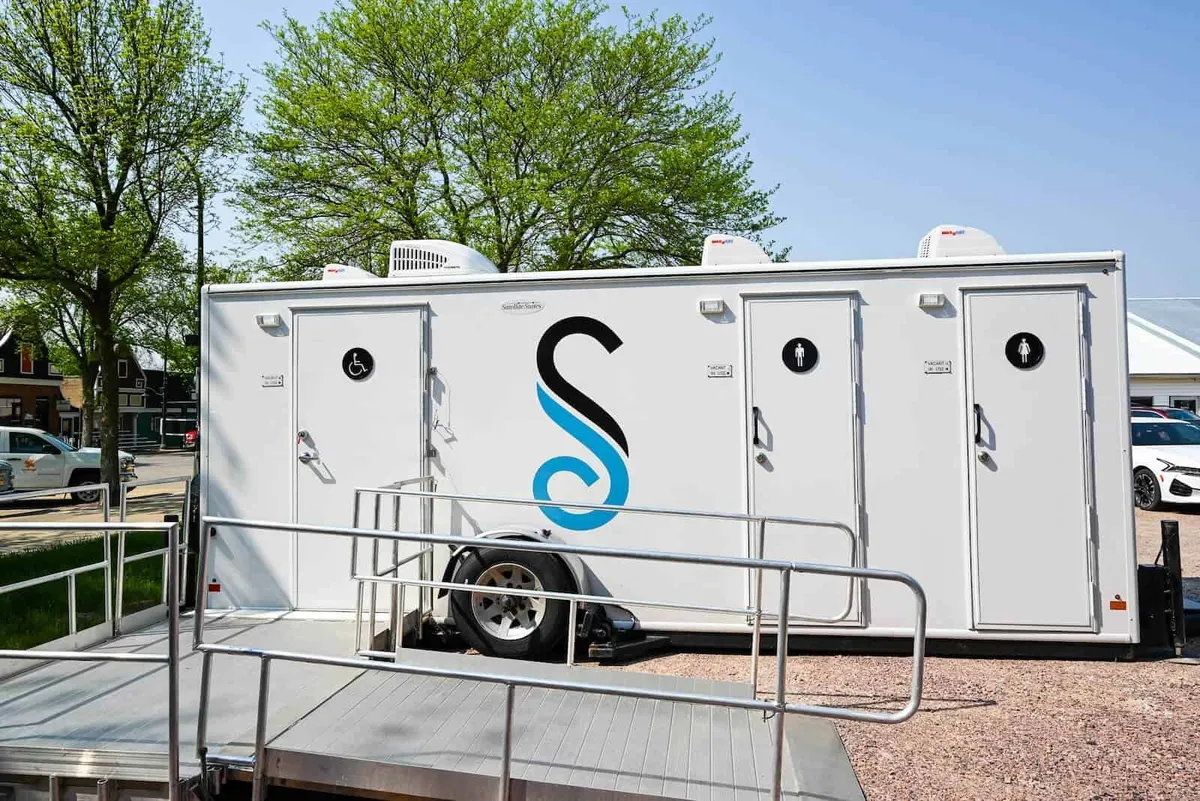
Remote destination weddings require completely self-contained restroom trailers that operate independently of external infrastructure. This means:
On-board fresh water: Trailers must arrive with full water tanks sufficient for your entire event. No water hookups available means no mid-event refilling options.
Waste containment: All waste stays on the trailer until post-event pumping at an appropriate disposal facility—potentially hours of driving from your venue.
Generator power: Remote sites rarely offer electrical hookups. Trailers need robust generators with fuel capacity for your entire event plus buffer time.
Climate control: Whether it’s Big Bend summer heat or Hill Country winter cold, climate control runs on generator power for the duration.
Quality rental companies maintain trailers equipped for remote operation, but not all equipment is equal. Confirm self-contained capabilities specifically when booking for remote destinations.
Delivery Logistics for Remote Venues
Getting restroom trailers to remote locations presents challenges that don’t exist for urban events:
Distance and Time
Delivery to Big Bend from Austin takes 5-6 hours each way. That’s a full day for delivery alone, affecting:
- Driver scheduling and costs
- Delivery timing relative to your event
- Pickup scheduling and flexibility
- Fuel costs for the delivery vehicle
Plan delivery for the day before your event rather than the morning of. This provides buffer for unexpected delays and time to address any issues before guests arrive.
Road Access
Remote Texas venues often have access challenges:
- Unpaved roads that become impassable after rain
- Low-water crossings that may be flooded
- Narrow lanes that don’t accommodate wide trailers
- Low-hanging trees or power lines
- Locked gates requiring coordination
- Steep grades that challenge loaded trucks
Scout the delivery route before booking. Share photos and descriptions with your rental company so they can confirm their equipment can reach your venue.
Ground Conditions at Placement Sites
Remote venues may lack the improved surfaces common at developed properties:
- Caliche, sand, or packed earth instead of gravel or pavement
- Slopes that require careful leveling
- Soft ground that can’t support trailer weight
- Rocky terrain that limits placement options
Identify specific placement locations and assess ground conditions. Your rental provider can advise on surface requirements.
Capacity Planning for Remote Events
Remote destination weddings require more conservative capacity planning than typical events. If something goes wrong—equipment issues, higher-than-expected usage—there’s no backup nearby.
Standard capacity guidelines suggest one restroom station per 25-35 guests. For remote destinations, plan at the conservative end: one station per 20-25 guests. This provides margin for:
- Unexpected high usage
- Potential equipment issues
- Extended event duration common at destination celebrations
- No backup options if you underestimate needs
The cost of slightly more capacity is minimal compared to the consequences of inadequate facilities at a remote location where alternatives don’t exist.
Water and Waste Capacity
For remote events, tank capacity becomes as important as station count:
Fresh water: Each flush and handwash uses water. Tanks must hold enough for your guest count and event duration. Typical trailers carry 100-300 gallons of fresh water—confirm capacity matches your needs.
Waste holding: Waste tanks must hold everything produced during your event. No mid-event pumping is possible at remote locations. Confirm waste capacity equals or exceeds fresh water capacity.
Multi-day events: Destination weddings often span multiple days—welcome gatherings, rehearsal dinners, the wedding itself. Tank capacity must cover the entire rental period, not just the main event.
Discuss specific capacity calculations with your rental provider based on guest count, event duration, and any multi-day needs.
Generator Considerations
Generator power keeps facilities operating—climate control, lighting, exhaust fans, and water pumps all require electricity:
Fuel capacity: Generators consume fuel continuously. Confirm sufficient fuel for your event duration plus contingency. A 6-hour wedding with 2 hours of buffer means 8+ hours of fuel capacity minimum.
Noise considerations: Generator noise may affect ceremony or reception areas. Position trailers with generators facing away from event spaces, using distance and natural barriers to minimize sound intrusion.
Backup power: For critical events at very remote locations, discuss backup generator options with your rental provider. A generator failure at a remote destination creates problems that can’t be easily solved.
Fuel sourcing: If your event spans multiple days, you may need on-site fuel reserves. Remote destinations may be hours from fuel stations.
Accessibility in Remote Locations
ADA-accessible restroom facilities are important at any wedding, but remote destinations present additional challenges:
- Terrain may be uneven or difficult to navigate
- Paths to facilities may require improvement for accessibility
- Ramp deployment requires level, firm surfaces
- Distance from parking to event areas may be significant
Plan accessible routes carefully. You may need to create temporary pathways or identify the most accessible approach to restroom facilities.
Weather Contingencies
Remote locations offer fewer options when weather turns challenging:
Rain and mud: Access roads may become impassable. If delivery can’t occur or pickup is delayed, have contingency plans. Ground around trailers may become muddy—plan for drainage and pathway protection.
Extreme heat: Remote West Texas locations can exceed 100°F. Climate control must handle extreme conditions, and generators need adequate fuel for extended cooling operation.
Wind: Open landscapes experience significant wind. Trailer stabilization becomes critical; approach areas may need wind protection.
Flash floods: Texas canyon country experiences flash flooding. Never position trailers in low areas or near drainage paths, regardless of current weather.
Communication Challenges
Remote destinations often have limited or no cellular service. This affects coordination with vendors, including restroom providers:
- Establish all logistics before arriving at the venue
- Have backup communication methods (satellite phones for truly remote areas)
- Provide detailed written directions—GPS may be unreliable
- Arrange check-in times and protocols in advance
If problems arise during your event, you may not be able to reach your rental provider. Plan for self-sufficiency.
Budget Implications
Remote destination weddings cost more for restroom facilities due to:
Extended delivery fees: Delivery to Big Bend from Austin might cost $600-1,000+ versus $150 for a local event.
Multi-day rentals: Delivery a day early and pickup a day late means longer rental periods.
Higher capacity needs: Conservative capacity planning means larger or more trailers.
Limited provider options: Fewer companies serve remote areas, reducing competitive pricing.
Budget $1,500-4,000+ for remote destination wedding restrooms depending on location, guest count, and event duration—significantly more than comparable local events.
Working with the Right Provider
Not all rental companies serve remote destinations. Look for providers with:
- Experience at similar remote locations
- Equipment designed for self-contained operation
- Willingness to discuss specific logistics in detail
- Clear policies for delivery challenges
- References from similar destination events
Ask specifically about their experience with remote deliveries. A company that primarily serves urban events may not anticipate the challenges your destination presents.
Making Remote Destinations Work
Remote Texas destinations create magical wedding experiences precisely because they’re removed from everyday life. But that removal demands comprehensive planning for every logistical detail—including restroom facilities.
Start planning early, work with providers experienced in remote deliveries, and build in contingency for the unexpected. Your guests will remember the stunning Big Bend sunset or the solitude of your West Texas ranch—not the challenges you solved to make it happen.
Planning a destination wedding in remote Texas? Request a quote with details about your location, and let’s discuss how to bring quality restroom facilities to your celebration.