When major disasters displace large populations, FEMA may establish base camps to support emergency workers or temporary housing sites for displaced residents. These large-scale operations require extensive sanitation infrastructure to serve populations that can number in the hundreds or thousands. Understanding FEMA camp restroom requirements helps contractors, emergency managers, and local officials prepare for and support these critical disaster response operations.
Understanding FEMA Camp Operations
FEMA establishes different types of camps depending on the disaster response needs. Base camps support emergency workers—federal personnel, contract workers, National Guard, and others responding to the disaster. Temporary housing sites provide intermediate shelter for displaced residents when shelters close but permanent housing isn’t yet available.
Both camp types require comprehensive infrastructure including sleeping quarters, food service, medical support, and sanitation facilities. The scale can be substantial—major base camps may house 1,000 or more workers, while temporary housing sites can accommodate thousands of displaced families.
FEMA contracts with vendors to provide various camp services, including sanitation. Understanding the requirements and standards that govern these contracts helps potential providers prepare to support disaster response.
Sanitation Capacity Requirements
FEMA camp sanitation requirements typically follow or exceed OSHA standards. The baseline of one toilet per 20 occupants applies, though camp specifications often require higher ratios to ensure adequate capacity for 24-hour operations.
Base camps supporting workers typically need facilities distributed across the camp—near sleeping areas, food service, operational centers, and work staging areas. Workers return to camp at various hours depending on their shifts, creating usage patterns different from daytime-only facilities.
Temporary housing sites require facilities convenient to residential areas while maintaining appropriate distances from living quarters. Facility placement must balance accessibility with quality of life considerations for residents who may occupy the site for weeks or months.
Facility Quality Standards
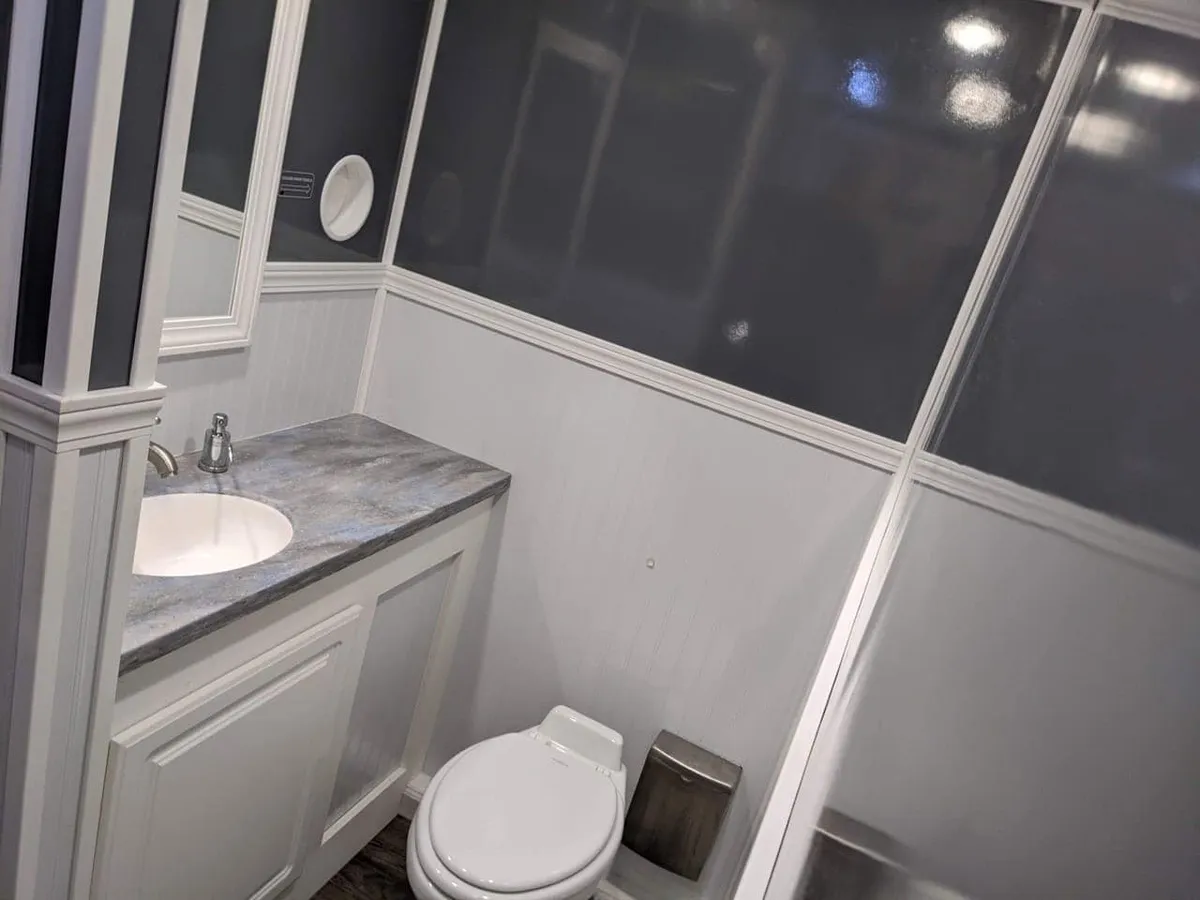
FEMA camp restroom facilities must meet specific quality standards. Self-contained restroom trailers with running water, flushing toilets, and climate control typically meet or exceed these requirements. Basic portable toilets generally don’t satisfy quality expectations for extended camp operations.
Climate control is essential for Texas deployments. Summer temperatures require air conditioning for usable facilities. Winter deployments need heating capability and freeze protection for plumbing systems.
Lighting, ventilation, and overall cleanliness standards apply throughout camp operation. Facilities must be maintained at quality levels appropriate for extended occupancy, not just minimum emergency standards.
ADA Accessibility Requirements
FEMA camps must provide accessible facilities meeting ADA requirements. Our ADA-compliant restroom trailers feature ramp access, grab bars, wider doorways, and appropriately positioned fixtures that satisfy federal accessibility standards.
The proportion of accessible facilities in FEMA camps typically follows federal guidelines—generally at least 5% of total facilities or a minimum number per location. Contract specifications detail exact requirements for each deployment.
Accessible facilities must be positioned on level ground with clear, maintained pathways from all areas they serve. Camp layout should ensure accessible routes remain navigable throughout the operation period.
Service and Maintenance Requirements
FEMA camp contracts typically specify service frequencies and response times for maintenance issues. Daily service is standard, with expectations for more frequent attention at high-use facilities or during peak operational periods.
Maintenance response requirements may specify maximum time frames for addressing reported issues. Camp managers expect prompt attention to facility problems that affect worker housing or resident quality of life.
Documentation of service activities supports contract compliance and cost tracking. Maintain detailed records of all service visits, repairs, and supply deliveries.
Self-Sufficiency Requirements
FEMA camps often operate in areas with damaged or limited infrastructure. Restroom facilities typically must be self-sufficient—capable of operating without connection to municipal water, sewer, or electrical systems.
Generator power provides electrical independence. Specify generator capacity adequate for climate control, lighting, and water systems throughout expected operational hours. Fuel logistics must ensure continuous operation.
Self-contained water and waste systems eliminate dependence on damaged utilities. Size capacity based on occupancy and service intervals, allowing buffer for situations where service might be delayed.
Contracting and Procurement
FEMA contracts sanitation services through various mechanisms depending on the situation. Pre-positioned contracts allow rapid deployment when disasters occur. Mission assignments direct work to qualified vendors. Direct contracts may be established for specific camp operations.
Vendors seeking FEMA work typically need registration in federal contracting systems and may need specific certifications or qualifications. Understanding procurement processes before disasters occur positions vendors to respond when opportunities arise.
Local vendors may subcontract to prime contractors holding FEMA camp contracts. Building relationships with major disaster response contractors creates opportunities for local providers.
Documentation and Compliance
FEMA contracts require extensive documentation. Track equipment deployments, service activities, personnel hours, and all associated costs. This documentation supports payment processing and demonstrates contract compliance.
Compliance with contract specifications must be demonstrable. Maintain records that show facility counts, service frequencies, response times, and quality standards were met throughout the contract period.
Inspection and audit provisions typically apply to FEMA contracts. Be prepared to demonstrate compliance during announced or unannounced inspections.
Scaling for Variable Populations
FEMA camp populations fluctuate as disaster response evolves. Base camps may grow as response operations scale up, then shrink as recovery progresses. Temporary housing sites may increase as shelters close, then decrease as permanent housing becomes available.
Contracts typically include provisions for scaling facilities up or down as populations change. Maintain capacity for rapid deployment of additional equipment when needed, and processes for efficiently demobilizing surplus facilities.
Communication with camp management about population changes helps anticipate scaling needs before they become urgent.
Texas-Specific Considerations
Texas has hosted numerous FEMA camp operations following hurricanes, floods, and other disasters. The state’s size means camps may be located far from major metropolitan areas, affecting logistics for equipment deployment and service.
Texas climate creates specific requirements—robust air conditioning for summer operations, heating capability for potential cold weather, and equipment designed to function in dusty conditions common in many parts of the state.
Local knowledge helps navigate Texas deployment challenges. Understanding road conditions, access limitations, and regional logistics supports successful camp operations.
Extended Duration Operations
FEMA camps may operate for extended periods—weeks for base camps, months for temporary housing sites. Equipment must be capable of sustained operation throughout these durations.
Long-term operations require attention to equipment maintenance beyond routine service. Components wear, systems need adjustment, and preventive maintenance prevents failures that affect camp operations.
Plan for equipment rotation or replacement during extended operations. Having backup capacity available ensures continuous operation even when primary equipment needs repair or replacement.
Supporting FEMA Operations
Quality restroom facilities support FEMA camp operations by maintaining the health and comfort of workers and residents. Meeting FEMA standards requires equipment, service capabilities, and documentation practices aligned with federal requirements.
Our experience supporting Texas disaster response includes work with FEMA operations and major disaster contractors. We understand the standards, processes, and capabilities required for successful FEMA camp support.
Ready to discuss capabilities for FEMA camp support or disaster response contracting? Contact us today to explore how we can support your disaster response operations.