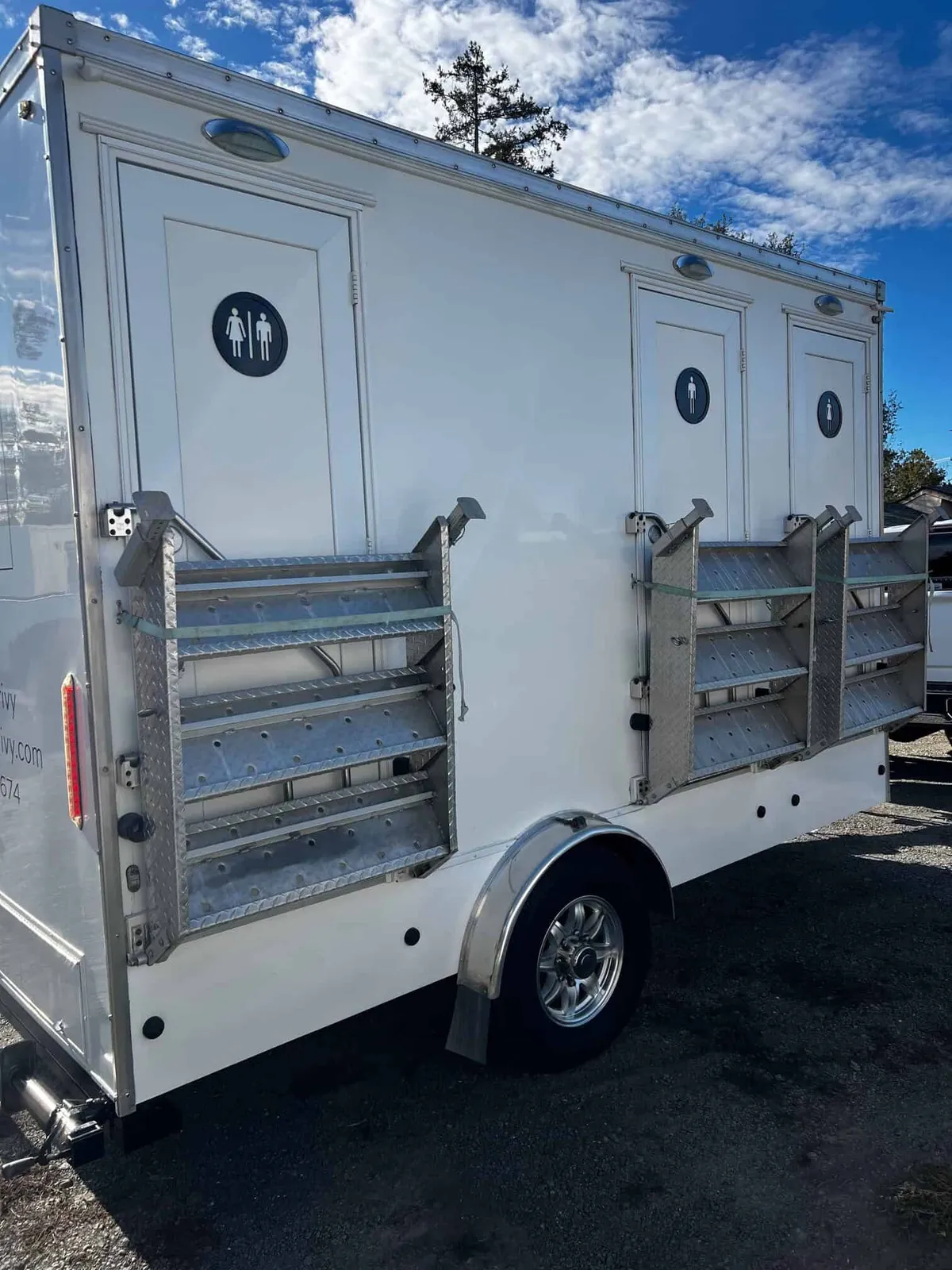
The Texas Hill Country has become one of the most sought-after wedding destinations in the American Southwest. Rolling limestone hills, ancient oak trees, spring-fed rivers, and that distinctive Texas sky create a backdrop that draws couples from across the country. From Fredericksburg to Wimberley, Dripping Springs to Marble Falls, Hill Country venues range from luxury resorts to family ranches to converted historic properties.
But the same remote beauty that makes Hill Country weddings magical also creates infrastructure challenges. Understanding how to plan restroom trailer logistics for this unique region helps ensure your event runs as smoothly as it looks in photos.
Understanding Hill Country Venue Types
Hill Country wedding venues vary dramatically in what they provide. Knowing what category your venue falls into helps you plan accordingly.
Full-service venues: Properties like established event ranches and resort venues often include restroom facilities as part of their infrastructure. These may be permanent buildings or high-end trailers they maintain on-site. Ask specifically what’s included and whether it’s adequate for your guest count.
Partial-service venues: Many Hill Country venues offer beautiful grounds with some infrastructure but expect couples to bring in additional facilities. A winery might have tasting room restrooms that serve 20 people but not the 150 at your wedding.
Raw venue spaces: Scenic properties—family land, undeveloped ranches, or natural areas—offer stunning settings with zero infrastructure. Everything from power to restrooms must be brought in.
Historic properties: Converted dance halls, old homesteads, and historic buildings may have existing plumbing that can’t handle event loads. Septic systems designed for residential use may require supplemental facilities for large gatherings.
Hill Country Terrain Considerations
The same dramatic topography that makes Hill Country venues photogenic creates specific logistical challenges for restroom trailer placement.
Sloped terrain: Hill Country properties are rarely flat. Restroom trailers need level ground—typically leveling equipment can handle some slope, but severe grades require finding alternative locations. Scout your venue for flat areas suitable for trailer placement.
Rocky ground: Limestone bedrock underlies much of the Hill Country, sometimes surfacing where you’d want to position facilities. Rocky areas may require adjustment to placement plans or additional stabilization.
Oak tree root zones: Those beautiful live oaks have extensive root systems. Avoid positioning heavy trailers where they might damage roots or where low branches interfere with the trailer structure.
Drainage patterns: Hill Country rainstorms can be intense. Understand where water flows across your venue after storms, and avoid placing trailers in drainage paths that could become problematic.
Access and Delivery Logistics
Many Hill Country venues sit at the end of narrow ranch roads or up challenging grades. Planning delivery logistics prevents day-of problems.
Road conditions: Gravel, caliche, or unpaved roads are common for the last stretch to Hill Country venues. Recent rain can make some routes temporarily impassable. Know your access road conditions and communicate them to providers.
Low water crossings: Some Hill Country properties require crossing normally dry creek beds that can become dangerous after rain. Understand whether your access route includes low water crossings and plan delivery timing accordingly.
Gate and bridge limitations: Narrow gates, weight-limited bridges, or low clearance points can restrict what vehicles can access your venue. Measure problem areas and share dimensions with your provider before booking.
Turnaround space: Delivery trucks pulling trailers need room to maneuver. Identify where trucks will turn around after positioning and ensure adequate space.
Power Solutions in the Hill Country
Climate-controlled restroom trailers require electrical power—a significant consideration for venues with limited or no power infrastructure.
Generator requirements: If your venue lacks electrical hookups near the restroom location, generators become necessary. Discuss power needs early—both wattage requirements and fuel logistics for multi-hour events.
Generator placement: Generators produce noise. Position them where the sound won’t intrude on your ceremony or reception while still providing power to restroom trailers. Hills and structures can help buffer sound.
Backup power: For critical events, consider whether backup power makes sense. A generator failure during your reception creates significant problems in a location without alternatives.
Water Considerations
Water availability varies significantly across Hill Country properties.
Self-contained trailers: Most wedding restroom trailers carry onboard fresh water sufficient for single-day events. For typical guest counts over 3-4 hours, self-contained operation works well without external connections.
Extended events: Multi-day celebrations or very large gatherings may benefit from external water connections if available. Discuss tank capacities with your provider relative to your expected usage.
Well water quality: If connecting to local water, Hill Country well water can have high mineral content affecting fixtures. Self-contained operation avoids potential issues with local water quality.
Hill Country Weather Patterns
Weather in the Texas Hill Country can shift rapidly and varies by season. Plan restroom facilities that perform in whatever conditions your wedding day delivers.
Summer heat: June through August temperatures regularly exceed 100°F. Air-conditioned restroom trailers aren’t a luxury—they’re necessary for guest comfort and safety. Confirm AC capacity and power supply.
Hill Country storms: Spring and fall can bring intense thunderstorms with little warning. Trailers need secure positioning, and your timeline should account for potential weather delays in delivery.
Flash flood potential: Hill Country terrain funnels water during heavy rain. Never position restroom facilities in dry creek beds or natural drainage channels, even if they seem ideal during dry weather.
Winter freezes: December through February occasionally brings freezing temperatures. Heated trailers and winterization prevent frozen pipes during cold snaps.
Popular Hill Country Wedding Areas
Different areas of the Hill Country present different considerations:
Fredericksburg/Stonewall: Wine country venues range from established wineries with infrastructure to scenic vineyard properties requiring full services. Tourism popularity means peak season availability books early.
Dripping Springs: Known as the wedding capital of Texas, venues here vary from full-service to raw land. Proximity to Austin means good vendor availability but high competition for quality equipment on popular dates.
Wimberley: Properties along the Blanco River and surrounding hills offer stunning settings. River access points may have restrictions during high water periods.
Marble Falls/Horseshoe Bay: Lake-adjacent venues combine water views with Hill Country terrain. Lake properties may have specific placement requirements due to environmental considerations.
Boerne/Comfort: Properties here range from historic German architecture to sprawling ranches. Some historic structures have preservation restrictions affecting where temporary facilities can be positioned.
Accessibility in Hill Country Settings
Hill Country terrain naturally challenges accessibility. Intentional planning prevents your restroom facilities from adding to those challenges.
ADA-accessible restroom trailers provide necessary accommodations, but placement matters as much as the trailer itself. Identify the most level, accessible route from main event areas to restroom locations. Consider whether guests with mobility challenges can reasonably reach facilities or whether additional accessible units should be positioned closer to key areas.
For venues where terrain between event spaces is particularly challenging, multiple smaller trailer placements may serve guests better than one central location requiring difficult traversal.
Working with Hill Country Providers
Experience matters when servicing Hill Country venues. Providers familiar with the region understand the access challenges, terrain issues, and logistics that catch newcomers off guard.
When evaluating providers, ask:
- Have you delivered to this specific venue before?
- What’s your experience with similar Hill Country properties?
- Can you assess the site before my event date?
- What happens if access becomes difficult due to weather?
- Do you have backup equipment available if primary units have problems?
Providers based closer to the Hill Country typically offer more competitive delivery rates and faster response for any issues that arise during your event.
Planning Your Hill Country Wedding Restrooms
Start this conversation 4-6 months before your wedding. Hill Country venues book heavily during peak seasons, and the same quality restroom trailers are in high demand across the region.
Visit your venue specifically to assess restroom logistics—not just overall beauty. Walk potential placement areas. Drive the access route. Take photos and measurements of any challenging spots. The more information you can share with providers, the better they can serve your specific venue.
Request a quote for your Hill Country wedding and let us help you navigate the logistics of your unique venue.