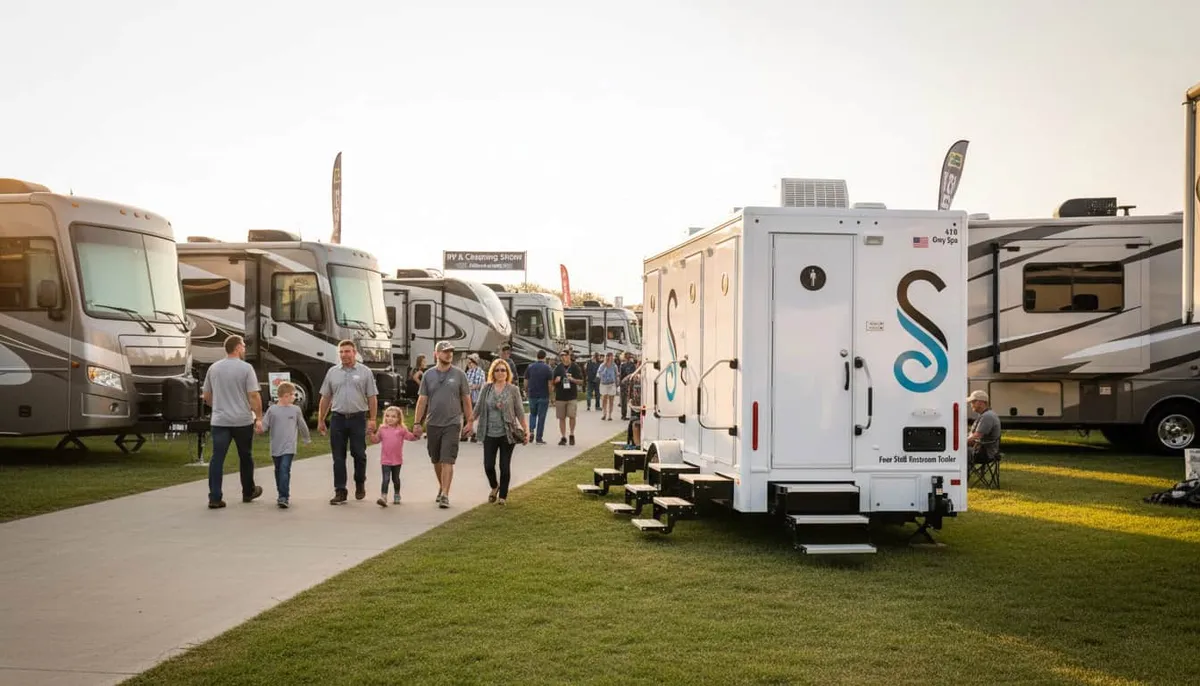
Multi-day festivals present the ultimate test of restroom facility management. Unlike single-day events where facilities only need to survive a few hours, multi-day festivals demand sustained performance across extended periods—often 3-5 days of continuous high-volume use. Texas festivals face additional challenges: intense summer heat, unpredictable weather, and the high expectations of festival-goers who’ve invested significant time and money in their experience.
This guide covers everything Texas festival organizers need to know about managing restroom trailer facilities across multi-day events. From initial planning through post-festival breakdown, you’ll learn strategies that keep facilities functioning, clean, and appreciated throughout your event.
Calculating Multi-Day Capacity Requirements
Multi-day festivals require capacity calculations that go beyond simple attendance-to-restroom ratios. Your facilities must accommodate peak usage during the busiest moments while maintaining reserve capacity for maintenance, rotation, and unexpected situations.
Peak Day Analysis
Most multi-day festivals have attendance variations across their run. Opening day might see 60% of peak attendance, with Saturday typically representing the highest volume. Calculate your restroom needs based on peak day attendance, not average daily numbers. Under-resourcing for your biggest day creates the worst possible experience when the most people are watching.
For a Texas festival expecting 15,000 attendees on peak day, apply standard calculations: one restroom station per 50-75 attendees yields 200-300 stations needed. For multi-day festivals, add 20-25% contingency capacity to allow for maintenance rotation and unexpected demand spikes. This example festival should plan for 250-375 restroom stations.
Overnight Considerations
Camping festivals add complexity that day-only events don’t face. Overnight guests need restroom access 24 hours a day, not just during performance hours. Camping areas require dedicated facilities separate from main festival grounds—attendees in sleeping bags at 3 AM shouldn’t have to walk to distant facilities.
Calculate camping area needs based on overnight population, typically 30-40% of daily attendance for festivals with significant camping. These facilities experience different usage patterns—steady overnight use rather than the surge patterns of performance areas. Plan for approximately one restroom station per 40-50 campers.
Servicing Schedules and Logistics
Sustained facility quality across multiple days depends entirely on effective servicing schedules. A restroom that starts the festival spotless will become unusable without regular maintenance—and festival-goers will notice and remember.
Waste Pumping Frequency
Self-contained restroom trailers include waste holding tanks with finite capacity. A standard restroom trailer might accommodate 300-500 uses before requiring pump-out service. High-traffic festival locations can reach capacity within a single day.
Plan pump-out schedules based on actual usage, not arbitrary time intervals. Festival main stages might need twice-daily service during peak days. Quieter peripheral areas might manage with daily service. Monitor tank levels and adjust schedules in real-time as usage patterns emerge.
Coordinate pumping operations for off-peak hours. The ideal service window is typically 6-9 AM, after overnight activity winds down but before main stage performances begin. This timing minimizes disruption and ensures fresh facilities for the day’s crowds.
Cleaning and Supply Replenishment
Beyond waste removal, facilities need regular cleaning and supply restocking. Paper products, soap, and sanitizer deplete quickly at festival volumes. Running out of toilet paper creates instant negative experiences that spread through word-of-mouth and social media.
Establish dedicated cleaning crews with scheduled rounds—typically every 2-3 hours during operating hours. Equip crews with supply carts containing all necessary restocking materials. Create checklists covering every maintenance task: check supplies, clean surfaces, empty trash, report issues.
Maintain substantial supply reserves on-site. Festival logistics often make emergency restocking difficult—supplies can’t easily reach interior locations once crowds arrive. Stock enough paper products, soap, and cleaning supplies for your entire festival run, plus 25% contingency.
Strategic Facility Distribution
Multi-day festivals typically span large grounds with distinct zones: main stages, secondary stages, camping areas, vendor rows, VIP sections. Each zone needs appropriate restroom facilities positioned for convenience without creating conflicts.
Stage Areas
Position restroom clusters at stage perimeters where attendees can access facilities without losing their positions in crowds. Main stage areas need the highest facility density—these locations see the heaviest traffic, especially during headliner set changes.
Secondary and tertiary stages need proportional facilities based on expected draw. A side stage drawing 2,000 attendees needs roughly one-fifth the facilities of a main stage drawing 10,000. Place facilities where they’re visible from stage areas so attendees can locate them quickly.
Food and Vendor Areas
Food service areas demand nearby restroom access for hygiene reasons. Festival food—greasy, messy, eaten without utensils—creates immediate hand-washing needs. Position facilities within easy reach of vendor rows, but maintain enough separation that restroom queues don’t interfere with food lines.
Texas health regulations may specify restroom proximity requirements for temporary food service operations. Check with your local health authority before finalizing placement—compliance issues discovered mid-festival create major problems.
VIP and Premium Areas
VIP ticket holders expect enhanced experiences including superior restroom facilities. Dedicate luxury restroom trailers to VIP areas with higher service frequency and additional amenities. These facilities should feel noticeably nicer than general admission options—that’s part of what VIP guests are paying for.
Keep VIP facilities proportionally sized to VIP attendance. A festival with 1,000 VIP guests doesn’t need massive VIP restroom infrastructure, but the facilities provided should be pristine and readily available.
ADA Accessibility Across Festival Grounds
Accessibility requirements extend throughout multi-day festival environments. ADA-compliant restroom trailers must be available in every festival zone where restrooms are provided, not concentrated in limited areas that require attendees with disabilities to travel significant distances.
Festival grounds often present accessibility challenges: uneven terrain, long distances, and surfaces that challenge wheelchair navigation. Create accessible pathways to restroom facilities using temporary matting, ground protection, or designated accessible routes. Staff should be trained to assist attendees with accessibility needs in locating appropriate facilities.
Camping areas with overnight accessible guests need 24-hour accessible restroom access. Don’t assume accessible guests won’t camp—many will, and they deserve the same convenient overnight facilities as other campers.
Weather and Environmental Management
Texas multi-day festivals face environmental challenges that intensify across extended events. Heat accumulates, storms may pass through, and facilities experience cumulative stress that single-day events don’t encounter.
Extended Heat Exposure
Texas summer festivals operate in conditions that stress both facilities and attendees. Air-conditioned restroom trailers become essential rather than luxury—interior temperatures in non-climate-controlled facilities can exceed 120°F during afternoon hours. Climate control systems must run continuously, requiring reliable power and regular maintenance checks.
Heat accelerates odor development in waste systems. Increase pumping frequency during extreme heat and use appropriate deodorizing treatments. What works at 85°F may be inadequate at 105°F—adjust your maintenance protocols accordingly.
Storm Contingencies
Multi-day festivals are statistically likely to encounter weather events. Have protocols ready for temporary facility closures during severe weather, post-storm facility assessment, and rapid restoration of service. Ground conditions around restrooms often suffer most from rain—pre-position materials for quick ground stabilization once storms pass.
Staff Training and Communication
Festival restroom management requires trained staff who understand their responsibilities and can communicate effectively about facility status. This isn’t a detail to address at the last minute—it requires deliberate planning and clear protocols.
Train cleaning and maintenance crews on proper sanitation procedures, supply management, and issue escalation. Define clear communication channels for reporting problems—a clogged toilet should reach maintenance staff within minutes, not hours. Equip crews with radios or messaging apps for rapid coordination.
Brief all festival staff on restroom locations so they can direct attendees. Nothing frustrates festival-goers more than staff who can’t answer the simple question: “Where’s the nearest bathroom?” Include restroom locations on festival maps and app interfaces.
Budgeting for Multi-Day Events
Multi-day festival restroom budgets extend well beyond rental costs. Factor in delivery and setup, daily servicing, supply replenishment, cleaning staff, power supply, ground protection, and contingency reserves. A realistic budget prevents mid-festival cost surprises that force service compromises.
Expect restroom facilities to represent 3-5% of total festival production budgets for well-planned events. This percentage increases for smaller festivals where fixed costs (delivery, setup) don’t scale down proportionally. Cutting restroom budgets creates problems that affect overall festival reputation—it’s not the place to economize.
Consider package arrangements with restroom providers that bundle equipment, servicing, and supplies into predictable costs. These packages often provide better value and simpler administration than piecing together separate vendors.
Partner with Texas Festival Experts
Multi-day festival restroom management demands experience that only comes from years of Texas event support. Working with providers who understand festival dynamics, Texas weather challenges, and the specific demands of extended events helps ensure your facilities perform throughout your festival run.
Ready to plan restroom facilities for your Texas multi-day festival? Request a comprehensive consultation covering capacity planning, placement strategy, servicing schedules, and contingency preparation. Let’s build a restroom plan that supports your festival from first gate opening to final breakdown.