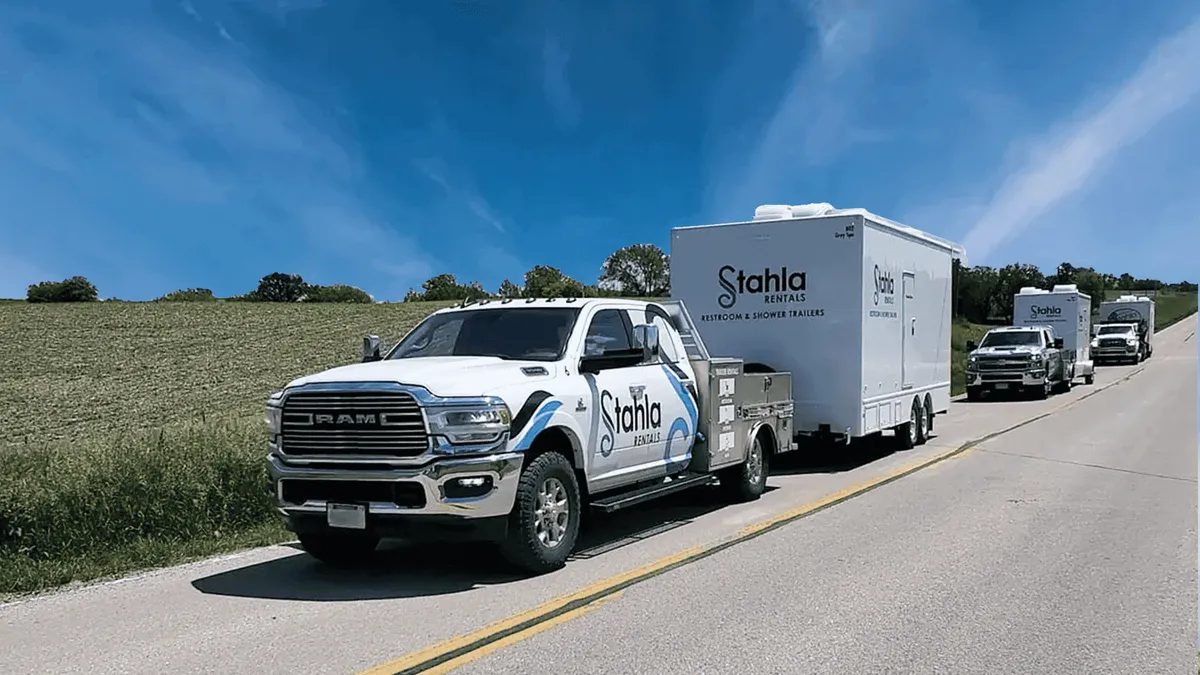
Outdoor weddings in Texas offer something indoor venues simply cannot match—wide open skies, natural beauty, and the freedom to create exactly the celebration you envision. From sprawling ranches in the Hill Country to beachfront ceremonies on the Gulf Coast, Texas couples increasingly choose outdoor settings for their most important day.
But here’s what venue tours don’t always reveal: that stunning outdoor location probably has limited—or zero—restroom facilities. Understanding why restroom trailers have become the go-to solution for outdoor Texas weddings helps you plan an event where guests focus on celebrating, not searching for facilities.
The Reality of Outdoor Venue Facilities
When couples fall in love with an outdoor Texas wedding venue, they’re usually captivated by the scenery, the photo opportunities, or the sentimental connection to a family property. Restroom availability rarely enters the conversation until later—and the reality can be jarring.
Consider these common outdoor venue situations:
- Family ranches and farms: Often have a single bathroom in the main house, nowhere near adequate for 100+ guests
- Vineyards and wineries: Tasting room facilities weren’t designed for wedding crowds
- Private estates: Beautiful grounds with residential plumbing not meant for event use
- Lakefront and riverfront properties: Remote locations with no facilities at all
- Open land and fields: Raw venue spaces requiring all infrastructure to be brought in
Asking 150 wedding guests to share one household bathroom isn’t just inconvenient—it creates lines, disrupts your timeline, and leaves guests frustrated during what should be a joyful celebration.
Why Porta Potties Fall Short for Weddings
The first thought for many couples is the basic portable toilet—they’re cheap and available everywhere. But there’s a reason experienced wedding planners and venues steer couples toward restroom trailers instead.
The Guest Experience Problem: Imagine your grandmother in her best dress, your pregnant bridesmaid, or your boss from work stepping into a hot plastic box with chemical odor and no running water. That moment becomes part of their memory of your wedding—and not a good part.
The Texas Heat Factor: Standard portable toilets in Texas summer heat become genuinely unpleasant. Interior temperatures can exceed 110°F, creating an experience guests actively try to avoid. When guests delay using facilities because conditions are unbearable, you’re creating a comfort problem that affects your entire event.
The Photo Risk: Portable toilets in wedding photos are almost impossible to hide. A row of plastic units visible behind your ceremony arch or reception tent changes the aesthetic of your entire event.
What Restroom Trailers Actually Provide
Modern restroom trailers bear no resemblance to portable toilets. Step inside a quality wedding trailer and you’ll find an environment comparable to—and sometimes nicer than—facilities at indoor venues.
Real Plumbing: Flushing toilets, running water at sinks, and proper ventilation. Guests wash their hands with soap and water, not hand sanitizer. The facilities function like the restroom at any nice restaurant or venue.
Climate Control: Air conditioning that actually works—critical for Texas outdoor events. Some trailers also include heating for those increasingly popular winter weddings. Guests step from outdoor heat into cool comfort.
Attractive Interiors: Finished interiors with quality flooring, vanity mirrors with lighting, and countertop space for guests to set down clutches or touch up makeup. Many couples add fresh flowers or personalized signage to match their wedding style.
Privacy and Separation: Separate men’s and women’s sides with individual stalls, often with solid doors rather than the gaps common in commercial restrooms. Multiple guests can use facilities simultaneously without discomfort.
Accessibility Matters More Than You Think
Your guest list almost certainly includes people who need accessible facilities—even if you don’t immediately think of them. Elderly grandparents with mobility issues. A bridesmaid’s father who uses a cane. A college friend who’s now using a wheelchair. A very pregnant cousin who needs extra space and grab bars.
ADA-compliant restroom trailers provide the space, ramps, grab bars, and accessibility features these guests need. Outdoor venues that lack accessible permanent facilities especially need this option—you don’t want any guest unable to participate fully in your celebration because facilities don’t accommodate them.
The Numbers That Matter
How many restroom stations do you actually need? Industry standards suggest these minimums for a 3-4 hour wedding reception:
- 50-75 guests: 2-3 stations minimum
- 100-150 guests: 4-5 stations
- 200+ guests: 6+ stations, often in multiple trailer units
These numbers assume you’re serving alcohol, which significantly increases restroom usage. They also assume you want minimal wait times during peak periods like cocktail hour. Underestimating leads to lines that pull guests away from your reception and create the restroom chatter you’re trying to avoid.
Strategic Placement for Outdoor Events
Where you position restroom trailers affects both guest convenience and your event aesthetic. Consider these factors:
Accessibility from all areas: Guests should be able to reach facilities from both ceremony and reception spaces without a lengthy walk. For large properties, multiple units in different locations may serve better than one central placement.
Sightlines and photography: Position trailers where they don’t appear in ceremony photos or behind important reception areas. Many venues have natural screening—trees, structures, or topography—that can shield trailers from view.
Evening lighting and pathways: Guests need to find facilities safely after dark. Plan for pathway lighting and clear directional signage. Most quality trailers include exterior lighting, but supplement as needed for the approach.
Delivery access: Trailers arrive on trucks and need reasonably solid ground and adequate clearance. Your provider can assess the site, but think through access routes in advance.
The Investment Perspective
Quality restroom trailers for Texas weddings typically run $1,000-2,500 depending on size, features, and your location. Compare that to what you’re spending on flowers that wilt in hours, or favors guests leave on tables.
Unlike many wedding expenses, restroom trailers directly affect every guest’s comfort throughout your entire event. They’re not a decorative upgrade—they’re infrastructure that determines whether guests spend your wedding relaxed and present, or uncomfortable and counting hours until they can leave.
Planning Your Outdoor Wedding Facilities
Start this conversation early—ideally 4-6 months before your wedding. Quality trailers book quickly during peak wedding season (April through June, September through November in Texas), and you’ll want time to coordinate delivery logistics with your venue and other vendors.
Visit your venue specifically to assess restroom logistics. Walk the grounds. Note existing facilities, potential trailer locations, and access routes. Take photos to share with providers.
Get a quote for your outdoor Texas wedding and ensure your beautiful venue comes with facilities that match the experience you’re creating.