SXSW transforms Austin every March. What began as a music showcase has evolved into a multi-week convergence of music, film, and interactive conferences that floods downtown Austin with hundreds of thousands of attendees. Official venues, unofficial showcases, sponsor activations, and pop-up experiences compete for attention across dozens of square miles.
For event organizers—whether hosting an official SXSW showcase, running a brand activation, or producing an adjacent event—restroom logistics during SXSW present unique challenges that regular event planning doesn’t address. Here’s what you need to know.
The SXSW Planning Environment
SXSW creates conditions that affect restroom planning differently than typical events:
Extreme competition for resources: Hundreds of events happen simultaneously, all competing for the same rental equipment. Standard “book early” advice becomes critical—equipment that’s available in January may be gone by February.
Unpredictable attendance: SXSW crowds are fluid. Attendees move between events based on word-of-mouth, social media buzz, and schedule changes. Planning for “expected” attendance often misses reality significantly.
Extended hours: Events run from morning panels through late-night showcases. Traditional event timelines don’t apply when your venue might host programming for 16+ hours daily.
Badge holder expectations: SXSW attendees include industry professionals accustomed to well-managed events. Poor facilities create negative impressions that spread quickly through a highly connected audience.
Official SXSW Venue Requirements
Official SXSW showcases must meet festival standards for venue infrastructure, including restroom facilities. If you’re hosting an official event, work with SXSW venue coordinators to understand requirements:
- Minimum facility ratios based on venue capacity
- Accessibility requirements for all venues
- Cleanliness and maintenance standards
- Signage and wayfinding requirements
- Emergency protocols that include facility considerations
These requirements exist because SXSW has learned from experience what works at festival scale. Meeting minimums is required; exceeding them improves your event’s reputation.
Unofficial Showcase and Activation Planning
The majority of SXSW restroom challenges occur at unofficial events—brand activations, day parties, pop-up experiences, and showcases not officially sanctioned by SXSW. These events often occupy non-traditional venues with limited or no permanent facilities.
Common Venue Types
Parking lots and vacant lots: Popular for outdoor day parties, these venues have zero existing facilities. Plan for complete portable infrastructure.
Warehouses and industrial spaces: Limited facilities designed for minimal daily use, not event crowds.
Restaurant patios and rooftops: Existing facilities may serve regular business needs but can’t handle event volume.
Backyard venues: East Austin home and backyard events need residential-scale supplementation.
Capacity Planning for SXSW Events
SXSW attendance patterns defy normal planning. Consider:
Surge capacity: A showcase that averages 200 attendees might see 500 during a hyped performance. Plan for peaks, not averages.
Duration factor: A 10-hour day party creates more total usage than a 3-hour showcase, even at the same capacity.
Alcohol impact: Open bar events—standard at SXSW brand activations—significantly increase restroom usage.
Turnaround time: Back-to-back events need facilities that can handle continuous usage without mid-day servicing.
For SXSW events, plan more aggressively than normal: one restroom station per 20-25 guests rather than the standard 1:35 ratio.
Brand Activation Standards
Sponsors hosting SXSW activations have brand reputation at stake. Restroom facilities become part of the brand experience—whether intentionally or not.
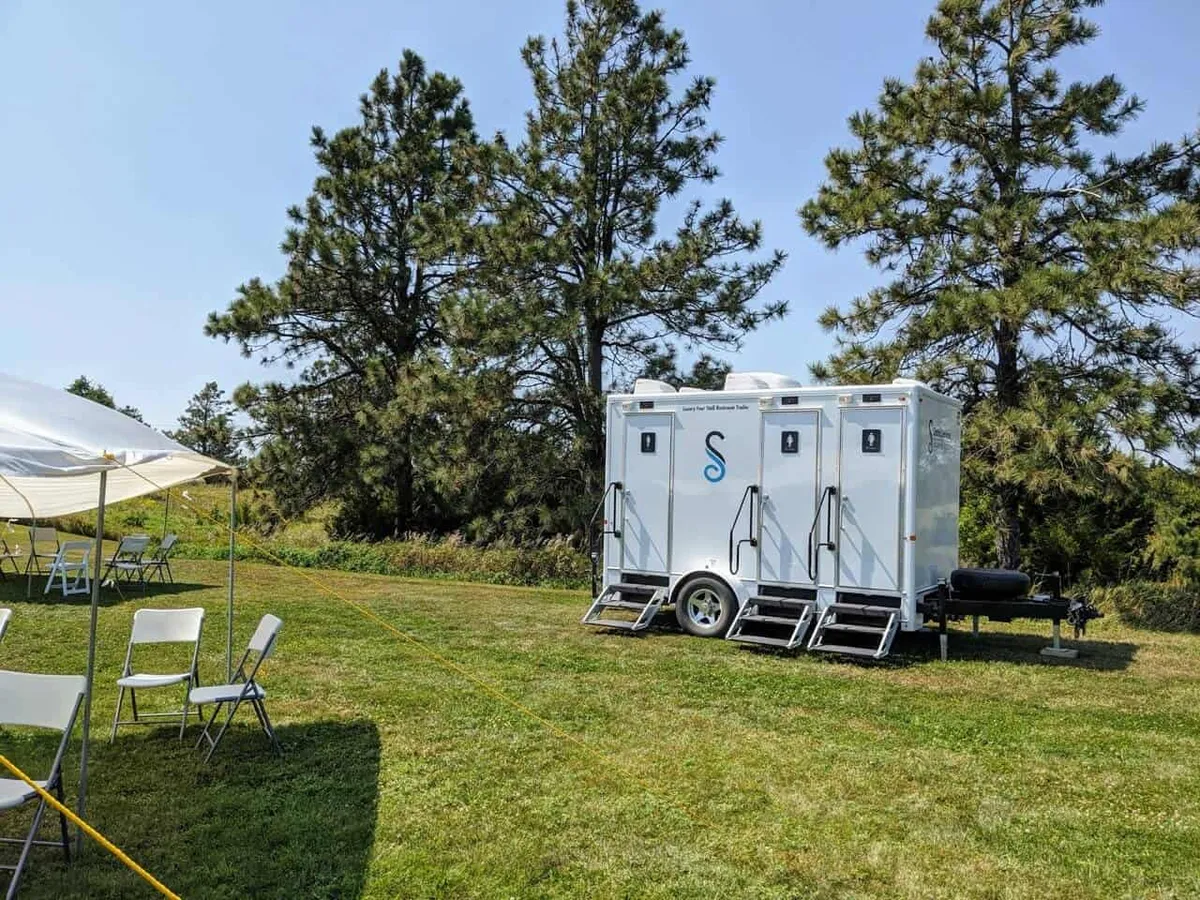
Premium expectations: Brand activations should feature restroom trailers rather than standard portable toilets. Climate-controlled facilities with running water and quality finishes maintain brand standards.
Branded opportunities: Some activations incorporate subtle branding into restroom areas—not tacky decals, but thoughtful touches like branded soap dispensers or custom signage that extends the experience.
VIP differentiation: Multi-tier activations may need separated facilities—general access areas plus elevated options for VIP guests and executives.
Attendant service: Staffed facilities demonstrate attention to detail and maintain cleanliness during high-volume periods.
City of Austin Permit Requirements
Austin requires event permits that may specify restroom requirements:
- Minimum facilities based on expected attendance and event duration
- ADA accessibility requirements
- Placement restrictions near food service areas
- Servicing schedules for multi-day events
- Waste disposal documentation
Work with your permit application to ensure restroom plans meet city requirements. Last-minute permit complications during SXSW week create problems that can’t be easily solved.
Booking Timeline for SXSW
SXSW depletes Austin’s rental equipment inventory. Plan accordingly:
October-November (prior year): Begin discussing needs with rental providers if you know you’ll need significant capacity.
December-January: Lock in reservations. Premium equipment—luxury trailers, large-capacity units—books out first.
February: Finalize logistics, delivery timing, and placement details. Equipment availability becomes limited.
March (SXSW week): Last-minute additions are nearly impossible. Work with what you’ve booked.
Waiting until February to begin planning often means accepting whatever equipment remains available rather than selecting optimal solutions.
Delivery and Placement Challenges
SXSW creates delivery complications that don’t exist during normal times:
Street closures: Downtown Austin streets close for official SXSW programming. Delivery must work around closures or occur before they take effect.
Traffic congestion: What’s normally a 30-minute delivery becomes 90+ minutes during SXSW. Build substantial buffer time into schedules.
Competing deliveries: Your rental provider is delivering to dozens of other SXSW events. Coordinate early delivery windows to ensure priority.
Limited staging areas: Dense event clustering means less space for equipment staging and setup.
Security and access: Some SXSW areas require credentials for vendor access. Ensure your rental provider has appropriate access to complete delivery.
Multi-Day Event Servicing
SXSW runs over two weeks. Events spanning multiple days need ongoing service:
Daily pumping: High-volume usage requires daily waste tank servicing. Schedule pumping during off-hours or build it into your timeline.
Supply restocking: Toilet paper, soap, and paper towels deplete faster during SXSW than typical events. Plan for daily restocking.
Cleaning schedules: Facilities used 12+ hours daily need more aggressive cleaning rotations.
Generator fuel: Multi-day operation consumes generator fuel. Confirm fueling schedules with your provider.
Coordinate servicing schedules during the initial booking. SXSW-week service calls compete with hundreds of other events for provider attention.
Weather Contingencies
March weather in Austin is unpredictable—70°F and sunny or 45°F with rain. Outdoor events need facilities that handle both:
Climate control: Climate-controlled trailers handle temperature swings that make standard portables uncomfortable.
Rain preparation: Drainage around facilities, covered approaches, and matting for mud prevention.
Cold weather operation: Ensure heating systems are functional if cold snaps are possible.
Severe weather protocols: Know how restroom facilities factor into severe weather responses.
Accessibility at SXSW Events
ADA-accessible facilities are required at any public event, but SXSW’s scale makes accessibility especially important:
- Distribute accessible facilities throughout your venue, not concentrated in one area
- Ensure accessible paths from parking to event areas to restrooms
- Account for SXSW crowds that may block accessible routes
- Train staff to assist guests with accessibility needs
- Have backup plans if primary accessible facilities need servicing
Learning from SXSW Failures
Every SXSW generates stories of events with inadequate facilities. Common failures include:
- Underestimating attendance at viral events
- Booking too late to secure adequate equipment
- Skipping servicing during multi-day events
- Ignoring weather preparations
- Concentrating facilities in one location while crowds spread across the venue
- Failing to plan for badge-holder expectations at brand activations
These failures become social media stories that undermine event reputation. The cost of adequate facilities is trivial compared to the brand damage from inadequate ones.
Planning Your SXSW Event
SXSW restroom planning requires earlier action, more aggressive capacity planning, and better coordination than typical events. The compressed timeframe and intense competition for resources leave no room for last-minute solutions.
Start planning months ahead, book early, and prepare for conditions that differ from normal Austin events. Your attendees will remember great experiences—or terrible ones. Facilities contribute more than you might expect to that calculus.
Planning an event during SXSW? Request a quote early—ideally months before March. We’ll help you secure equipment while availability still exists.