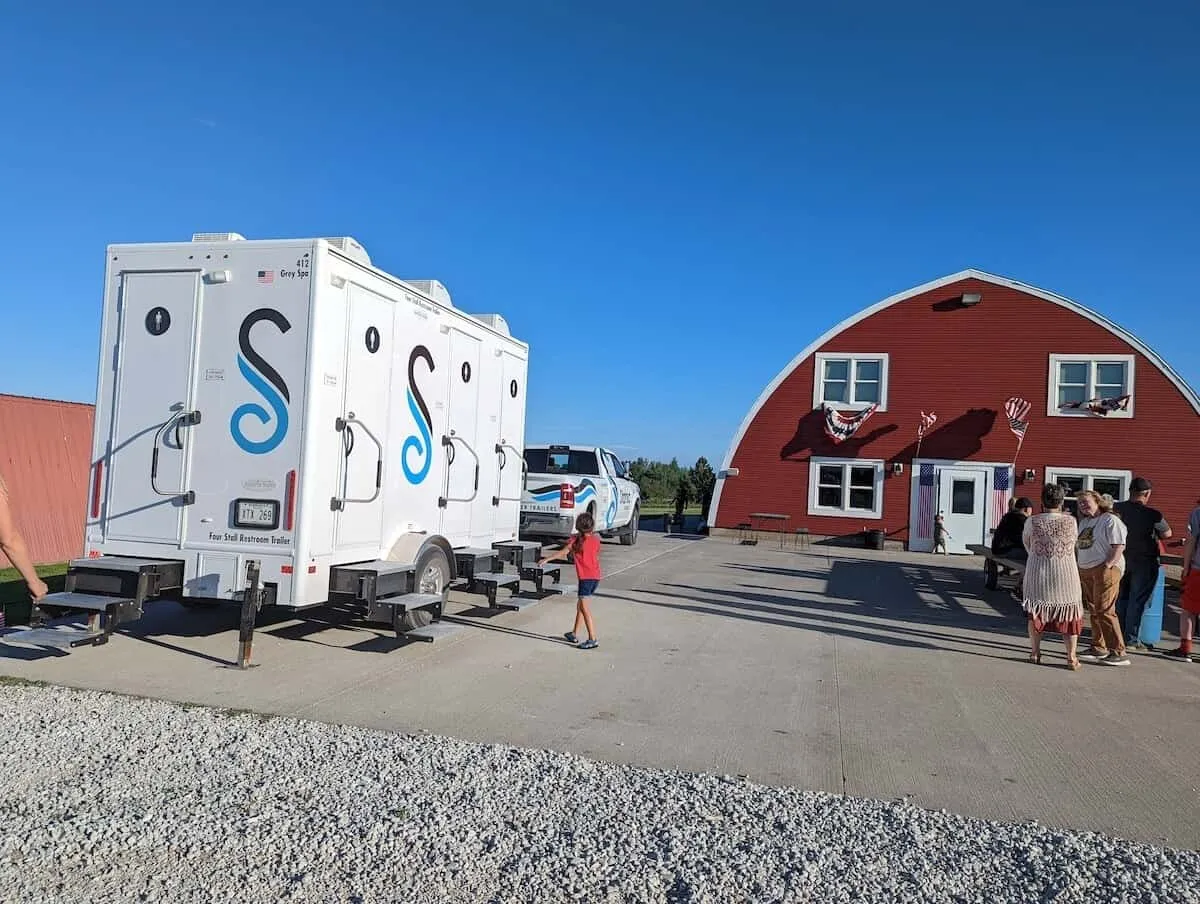
Trade shows bring industries together in Texas throughout the year—from massive conventions in Houston and Dallas to specialized exhibitions across the state. While major convention centers typically have permanent restroom infrastructure, many trade show scenarios require supplemental or entirely portable facilities. Outdoor exhibition components, overflow capacity during peak attendance, VIP hospitality areas, and non-traditional venues all create needs for restroom trailer rentals.
This guide addresses restroom planning for Texas trade show organizers and exhibitors. Whether you’re managing an entire show or enhancing your company’s booth experience, understanding restroom logistics helps ensure smooth operations throughout your event.
Trade Show Restroom Scenarios
Different trade show situations call for different restroom solutions. Understanding common scenarios helps you identify what your specific event requires.
Outdoor Exhibition Areas
Many trade shows include outdoor components—equipment demonstrations, vehicle displays, outdoor testing areas, or overflow exhibit space. These outdoor zones require dedicated restroom facilities regardless of what indoor convention center infrastructure exists. Attendees in outdoor areas shouldn’t have to trek back inside to use facilities.
Equipment and vehicle shows often feature large outdoor footprints where attendees spend significant time. Position outdoor restroom trailers to serve these areas with the same convenience level as indoor facilities.
Convention Center Overflow
Large trade shows can overwhelm convention center restroom capacity during peak attendance periods. When registration projections suggest potential capacity issues, supplemental portable facilities positioned strategically prevent the long lines that frustrate attendees and reflect poorly on show management.
Monitor restroom conditions during early show hours. If lines develop at permanent facilities, additional portable units can be deployed for subsequent days, though advance planning is always preferable to reactive solutions.
VIP and Exhibitor Hospitality
Trade shows often include VIP programs, sponsor hospitality areas, and exhibitor lounges that benefit from dedicated restroom facilities. These private spaces serve attendees paying premium prices or hosting important client meetings. Luxury restroom trailers in hospitality zones create appropriate experiences without competing with general attendee traffic.
Non-Traditional Venues
Some trade shows occur outside convention centers—industrial facilities hosting manufacturing equipment shows, outdoor venues for agricultural or construction equipment exhibitions, or warehouse spaces converted for specialized trade events. These venues often lack adequate permanent restroom infrastructure, requiring comprehensive portable solutions.
Exhibitor-Provided Facilities
Individual exhibitors sometimes provide private restroom facilities within their booth or hospitality areas, particularly at large shows where major exhibitors invest significantly in attendee experience.
Booth Hospitality Suites
Large exhibitor booths with hospitality components—meeting rooms, private demonstration areas, client entertainment spaces—may incorporate restroom facilities for their guests. This allows hosting extended meetings without guests leaving the exhibitor space. Compact luxury restroom units designed for indoor placement serve these applications.
Coordinate with venue management about requirements and restrictions for exhibitor-provided restroom facilities. Convention centers have specific rules about waste management, water supply, and placement that affect what’s permissible.
Outdoor Exhibit Demonstrations
Exhibitors with outdoor demonstration areas—equipment manufacturers, vehicle companies, construction product suppliers—often provide dedicated restrooms for their demonstration guests. These facilities create better experiences for guests spending extended time in outdoor exhibit areas and keep demonstration attendees engaged rather than disappearing to find facilities.
Capacity Planning for Trade Shows
Trade show restroom capacity calculations must account for attendance patterns specific to exhibition events.
Peak Hour Dynamics
Trade show attendance typically peaks during mid-morning and early afternoon hours, with lighter traffic during early opening and late afternoon periods. Calculate restroom capacity for peak attendance periods, not average daily figures. A show with 5,000 daily attendees might have 3,000 present during peak hours—plan facilities for that peak.
Multi-Day Considerations
Trade shows typically span multiple days, often with varying daily attendance. Opening day and major keynote days often see highest attendance. Final days may have significantly lower traffic. Your facilities must handle peak day demands while remaining operational throughout the show run.
Calculation Framework
For trade show supplemental facilities (adding to existing convention center infrastructure), plan one additional station per 100-150 attendees expected in areas served by portable facilities. For venues without permanent infrastructure, use standard event ratios of one station per 50-75 attendees.
VIP and hospitality areas warrant higher ratios—one station per 25-35 guests ensures premium experiences without wait times.
Placement Strategies
Trade show restroom placement must serve attendees without interfering with exhibit traffic flow or booth visibility.
Traffic Flow Integration
Position facilities along natural traffic corridors where attendees can access them without significant detours. Entrances, registration areas, and transition zones between exhibit halls often work well. Avoid placement that creates cross-traffic conflicting with exhibit aisle flow.
Exhibitor Sight Lines
Don’t position restroom facilities where they block exhibitor booth visibility or create visual distractions from exhibit content. Exhibitors pay significant fees for booth space—restroom placement shouldn’t diminish their exposure or create unappealing sight lines from their positions.
Outdoor Area Distribution
For outdoor exhibition areas, distribute facilities throughout the outdoor footprint rather than concentrating them at perimeters. Attendees exploring outdoor exhibits shouldn’t face long walks to reach facilities. Position units so no location is more than 2-3 minutes walk from restroom access.
ADA Compliance
Trade show attendees include people with disabilities—industry professionals, buyers, and decision-makers who use wheelchairs or have mobility challenges. ADA-compliant restroom trailers ensure full participation in your trade show regardless of physical ability.
Position accessible facilities throughout service areas, not concentrated in single locations. Accessible routes to restroom facilities from exhibit areas warrant attention—ensure pathways are clear and navigable for wheelchair users.
Professional Standards
Trade shows are business events where professional standards apply throughout. Restroom facilities should feel consistent with the professional environment attendees expect.
Quality Expectations
Trade show attendees are often business professionals accustomed to quality environments. While luxury facilities aren’t always necessary, clean, well-maintained, properly functioning facilities are essential. Facilities that would be acceptable at casual outdoor events may feel inadequate at professional trade show environments.
Maintenance Standards
Multi-day trade shows require consistent maintenance throughout the event run. Plan for daily servicing between show hours and periodic checks during operating hours. Assign staff to monitor conditions and address issues quickly—professionals notice declining facility quality and attribute it to show management competence.
Coordination with Venue Management
Trade show restroom planning requires coordination with convention center or venue management. Most venues have specific requirements about portable facility placement, waste management, and utility connections.
Placement approvals: Venues typically must approve placement locations for portable facilities. Submit placement plans early and expect potential modifications based on venue operational requirements.
Utility access: If facilities will connect to venue water or electrical systems, coordinate connections through venue management. Self-contained units may be preferable when venue utility access is complicated.
Waste management: Coordinate pumping and waste removal schedules with venue operations. Some venues restrict service vehicle access during show hours, requiring overnight servicing.
Load-in/load-out: Restroom equipment delivery and removal must fit within venue load-in/load-out schedules. Plan equipment delivery timing that aligns with overall show setup sequencing.
Industry-Specific Considerations
Different industries have different trade show characteristics affecting restroom planning.
Construction and equipment shows: Heavy outdoor components, attendees in work attire, extended demonstration schedules. Plan robust facilities capable of handling attendees who may be dusty from outdoor activities.
Technology shows: Predominantly indoor exhibits, professional attire, shorter average booth visits. Facilities should feel contemporary and well-designed.
Medical and healthcare shows: Heightened hygiene expectations, professional audiences. Emphasize cleanliness and hand sanitization options.
Agricultural shows: Significant outdoor components, varied attendee demographics, extended show days. Plan for sustained outdoor facility needs across long operating hours.
Budgeting for Trade Show Restrooms
Trade show restroom costs vary based on scope—supplementing convention center facilities differs significantly from providing all restroom infrastructure at non-traditional venues.
For supplemental facilities, budget $2-$6 per expected attendee for multi-day shows. Comprehensive facilities at venues without permanent infrastructure warrant $8-$15 per attendee-day. VIP and hospitality facilities may cost $20-$40 per guest served.
These costs protect your show’s reputation. Trade show organizers invest enormously in producing successful events—inadequate restroom facilities can undermine satisfaction despite excellence in other areas.
Partner with Texas Trade Show Specialists
Trade show restroom planning requires providers who understand exhibition logistics, venue coordination requirements, and professional event standards. Working with experienced partners helps ensure your facilities support rather than complicate your trade show operations.
Ready to plan restroom facilities for your Texas trade show? Request a consultation addressing your venue characteristics, attendance expectations, and specific facility requirements. Let’s create solutions that support successful exhibition experiences.